





Whether caused by sun exposure, aging, hormonal fluctuations, or stubborn acne marks, dark spots (hyperpigmentation) remain one of the most common beauty concerns worldwide. For decades, the global skincare market has relied on popular brightening ingredients such as hydroquinone, vitamin C, kojic acid, and arbutin. While these traditional ingredients can be effective, many users still struggle with recurring dark spots, slow results, or skin irritation.
In recent years, a rising star in dermatological science-4-butylresorcinol-has captured the attention of cosmetic formulators and beauty enthusiasts alike. Renowned for its exceptional ability to target dark spots at their root, this ingredient is redefining how we achieve an even, radiant complexion. But what exactly makes 4-butylresorcinol so effective, and why is it considered a significant upgrade over traditional anti-spot products?
The Formation of Dark Spots: The "Melanin Factory" Within the Skin
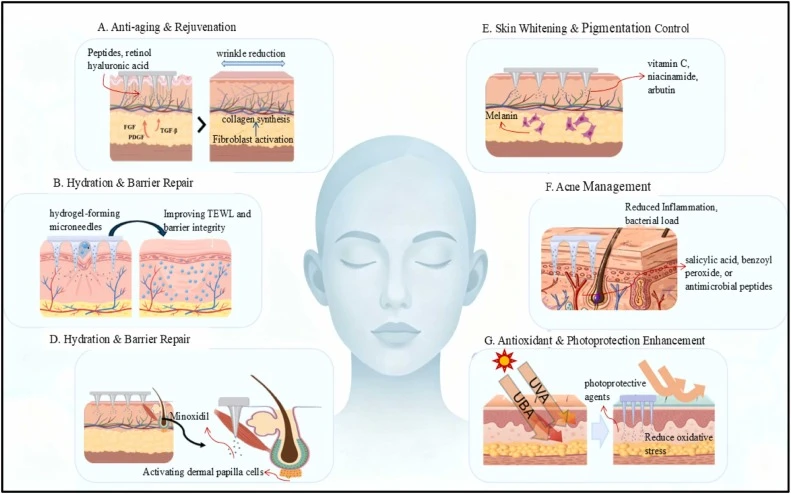
To understand what makes 4-butylresorcinol unique, you first need to understand how dark spots form: deep within the lower layers of our skin lie specialized cells called melanocytes. Think of these cells as tiny pigment factories. When your skin is exposed to ultraviolet (UV) rays from the sun or experiences inflammation-such as from an acne breakout-these "factories" receive a signal to begin producing melanin. This natural pigment gives color to our skin, hair, and eyes.
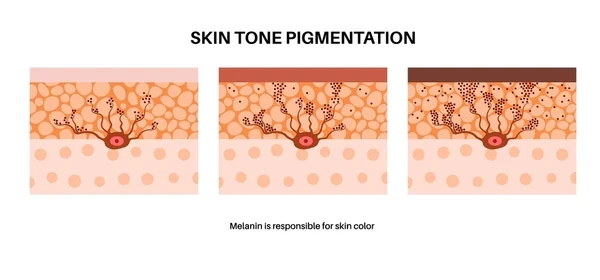
The master switch within this "factory" is a key protein called tyrosinase. Think of tyrosinase as the key that activates the pigment production line. When tyrosinase is active, it produces pigment and pushes it toward the skin's surface, resulting in visible dark spots and an uneven skin tone.
Traditional brightening ingredients typically work by absorbing UV rays, soothing inflammation, or clearing away pigment that has already formed. In contrast, 4-butylresorcinol addresses the issue at the source by directly inhibiting pigment production. Why 4-Butylresorcinol Outperforms Traditional Ingredients
How does 4-butylresorcinol compare with the well-known ingredients we often see on skincare serum labels?
Let's break down its core advantages in simple, accessible terms:
1. Exceptional Efficacy at Ultra-Low Concentrations
In dermatology, an ingredient's potency is often measured by the concentration required to inhibit a key enzyme involved in pigmentation-tyrosinase.
Arbutin and Kojic Acid: These classic ingredients act like a gentle nudge to "switch off" the enzyme. Formulators typically need to use higher concentrations to achieve visible results, which can sometimes lead to skin sensitivity.
4-Butylresorcinol: This acts like a precision-fit key, locking the target enzyme firmly in place. Laboratory studies on human skin enzymes have shown that 4-butylresorcinol is significantly more potent than both kojic acid and arbutin. Because of this efficiency, formulators need only a tiny amount to achieve a noticeable reduction in dark spots.
2. Gentle Care for the Skin Barrier
For years, hydroquinone was considered the most potent option for treating stubborn dark spots. However, it comes with serious drawbacks: long-term use can damage skin cells, cause severe irritation, and even lead to "rebound" pigmentation. In fact, many countries have banned or restricted its use in cosmetic products.
4-Butylresorcinol effectively fades dark spots without harming skin cells. It gently inhibits the pigmentation process while protecting the skin barrier, making it suitable for long-term, daily use-even for sensitive skin.
3. Dual Defense Mechanism
Most traditional ingredients target only a single stage of the pigmentation process. In contrast, 4-Butylresorcinol offers a dual defense: it inhibits tyrosinase-the primary enzyme that triggers pigmentation-as well as a secondary, auxiliary enzyme known as TRP-1. By blocking both pathways, it prevents pigment from maturing and reaching the skin's surface.
Real-World Applications: From Post-Acne Marks to Daily Brightening
Beyond general skin brightening, 4-Butylresorcinol performs exceptionally well in treating post-inflammatory hyperpigmentation (PIH). When skin recovers from acne breakouts, eczema, or aggressive cosmetic treatments, localized dark spots often remain for months. By quickly intervening in the enzymatic cascade, topical formulations containing this ingredient help fade stubborn red and brown marks.
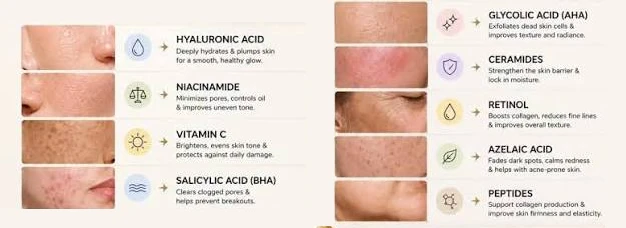
Cosmetic chemists also pair 4-Butylresorcinol with complementary actives to build comprehensive skin-tone solutions. Combining it with Niacinamide (which blocks pigment transfer) or mild exfoliants like Lactic Acid creates a multi-layered barrier against dark spots. This synergistic approach lets finished products deliver visible clarity without increasing irritation risk for end users.
What is the original form of 4-Butylresorcinol?
Before 4-Butylresorcinol appears on store shelves as a refined serum or a lightweight cream, it exists as a high-purity active raw material. Skincare brands, research institutions, and cosmetic chemists source this ingredient in its pure, powdered form to ensure it meets rigorous quality standards.
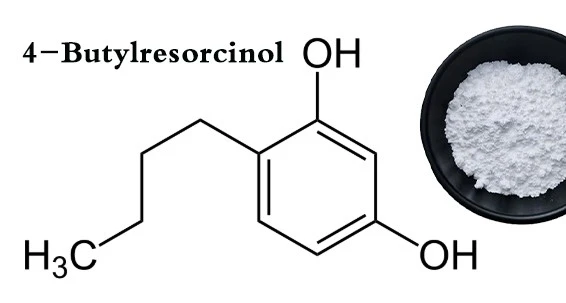
Butylresorcinol (4-Butylbenzene-1,3-diol; CAS No.: 18979-61-8) is a high-purity active cosmetic ingredient-typically $\ge 98.0\%$ pure-that appears as an off-white to pale yellowish-brown crystalline powder. It is readily soluble in polyols, alcohols, and oils, making it highly compatible with various formulations. To maintain its chemical stability, it must be stored in a cool, dark, and airtight environment.
Because pure 4-Butylresorcinol powder is light-sensitive and has a relatively low melting point, professional cosmetic formulators typically combine it with synergistic antioxidants (such as Vitamin E or ferulic acid) and mild chelating agents. This keeps the final lotion or serum fresh, clear, and effective throughout its shelf life.
The Future of Intelligent Brightening Skincare
As modern skincare enthusiasts become increasingly knowledgeable about ingredient safety and the science behind skincare, the demand for harsh, "bleaching" products is rapidly declining. The future lies in intelligent, precise ingredients that work in harmony with the body's own biological pathways.
4-Butylresorcinol (CAS 18979-61-8) can block dark spot formation at the source without compromising skin health-a significant advancement in modern cosmetics. Whether incorporated into daily brightening products, targeted spot-fading treatments, or post-sun repair creams, this versatile ingredient helps various skin types achieve a clearer, more resilient complexion.