






For the millions of people affected by "pattern hair loss," the search for effective interventions has long been complicated by a persistent dilemma: how to achieve meaningful therapeutic results while avoiding potential systemic side effects. Traditional oral therapies aim to inhibit dihydrotestosterone (DHT)-the primary hormone responsible for hair follicle miniaturization-by suppressing its levels throughout the body. While effective, this "broad-spectrum" approach can trigger systemic adverse reactions, leading many individuals to discontinue treatment.
However, advancements in dermatopharmacology are driving a paradigm shift toward "localized targeted management." Researchers are now focusing on a highly precise biochemical mechanism: competitive androgen receptor antagonism, restricted exclusively to the scalp.
The Root Cause: Why Does DHT "Target" Hair Follicles?
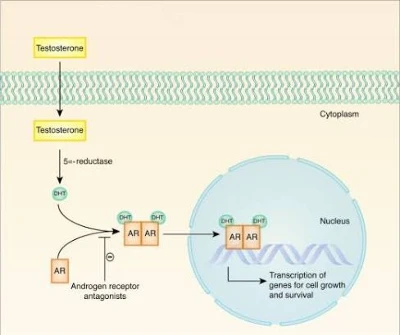
Androgenetic alopecia (AGA)-commonly known as "pattern hair loss"-stems from a genetic sensitivity to DHT. Within the scalp, the enzyme 5-alpha-reductase converts circulating testosterone into DHT. When DHT binds to androgen receptors (AR) in hair follicle cells, it triggers a signaling cascade that gradually miniaturizes the follicles. Over time, the hair's growth phase (anagen) shortens, thick terminal hairs degenerate into fine, wispy vellus hairs, and overall follicle density declines.
Conventional treatments primarily focus on inhibiting 5-alpha-reductase to reduce total DHT production throughout the body. While lowering systemic DHT levels protects hair follicles, it also interferes with the hormone's normal physiological functions in other, non-targeted tissues.

A Breakthrough Mechanism: Blocking the Androgen Receptor (AR)
Instead of altering hormone production throughout the body, this new generation of research focuses directly on receptor sites on the scalp. Researchers have developed a specialized class of small-molecule topical drugs that function as non-steroidal, competitive antagonists. These compounds bind to androgen receptors on dermal papilla cells, physically preventing dihydrotestosterone (DHT) from binding.
Because the hormones continue to perform their normal physiological functions elsewhere in the body, this "localized receptor blockade" strategy allows precise neutralization of DHT's negative effects within the hair follicle microenvironment.
Within this emerging pharmacological category, one leading active ingredient under investigation is Pyrilutamide (often identified in clinical research literature by its development code, KX-826).
How localized, precise action avoids systemic exposure
A long-standing challenge for topical therapies is keeping the drug out of systemic circulation. Advanced molecules like Pyrilutamide (KX-826) effectively address this issue through a dual-layered safety mechanism built into their metabolic pathways:
1. Scalp retention: Designed specifically for topical administration, the formulation penetrates the epidermis and dermis of the scalp, ensuring a high concentration of the active ingredient around the hair follicle bulb.
2. Rapid metabolic inactivation: Should a small amount of the compound breach the dermal barrier and enter the bloodstream, it is swiftly degraded by enzymes into inactive metabolites.
Because the concentration of active compound reaching the systemic circulation is extremely low, androgen receptor signaling pathways throughout the body remain undisturbed. Consequently, clinical studies have shown a favorable safety profile; any reported adverse events have typically been transient and localized-such as mild scalp redness or irritation-rather than systemic, hormone-related side effects.
Scientific prospects and clinical direction
The shift toward "localized androgen receptor antagonism" represents a significant milestone in modern hair medicine. By decoupling scalp hair maintenance from systemic hormonal suppression, active ingredients like Pyrilutamide demonstrate the potential and feasibility of targeted, site-specific therapy. As global clinical trials progress, interest in locally targeted androgen receptor (AR) antagonists is growing, offering promising insights into how modern dermatology can safeguard hair health without compromising overall well-being.
Synergistic Delivery Systems: Maximizing Scalp Absorption for Target Precision
While molecular design determines how effectively a compound binds to androgen receptors, successful localized action ultimately depends on transdermal delivery performance. The scalp presents a unique physiological challenge for topical active ingredients: the formulation must navigate the rich stratum corneum lipid barrier and reach the follicular infundibulum, where the dermal papilla resides, without driving systemic absorption.
To address this challenge, modern formulation science relies on advanced carrier vehicles engineered specifically for follicular targeting:
Ethosomal and Liposomal Encapsulation: Vesicular carriers encapsulate lipophilic active molecules within phospholipid bilayers. This structure fuses seamlessly with epidermal lipids, creating a localized reservoir within the hair follicle that releases the active ingredient steadily over time.
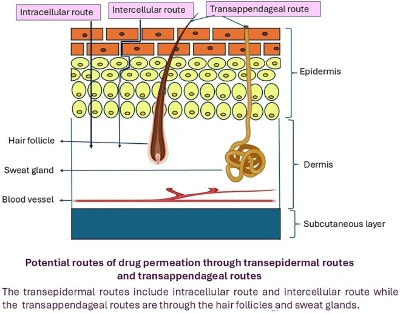
Hydroalcoholic-Glycolic Systems: Precision-balanced solvent networks optimize the thermodynamic activity of the raw powder. By preventing crystallization on the scalp surface, these systems facilitate uniform entry into the follicular pore.
Micro-Emulsion Technologies: Ultra-low interfacial-tension systems let active molecules migrate along the sebum-lined follicular wall, increasing targeted accumulation at the dermal papilla.
By pairing high-affinity receptor antagonists like KX826 Powder with engineered delivery systems, formulators can ensure high local bioavailability at the target site while maintaining a clean safety profile for daily, long-term scalp preservation.
Clinical Insights and Biomarker Monitoring: Evaluating Real-World Efficacy
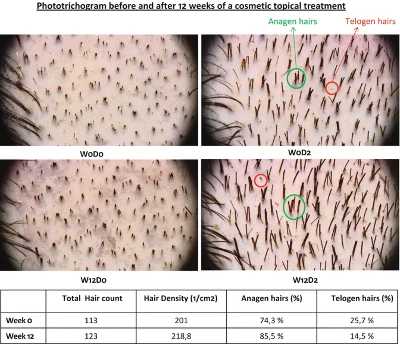
Beyond molecular design and targeted delivery, evaluating topical receptor antagonists-such as KX826-requires sophisticated biomarker monitoring in preclinical or observational studies. While traditional assessments of hair retention have relied almost exclusively on global photography and manual hair counting, modern cellular-level diagnostic techniques now let researchers track hair follicle biology with unprecedented precision.
Key diagnostic markers and imaging modalities include:
Phototricogram and Dermoscopy: These non-invasive, high-resolution imaging methods track changes in hair density, hair shaft diameter, and the anagen (growth phase)- to-telogen (resting phase) hair ratio within specific test areas over time.
Targeted Gene Expression Analysis: By measuring the activity of downstream biomarkers-such as TGF-beta2 and DKK-1, which are signaling proteins induced by dihydrotestosterone (DHT) that promote hair follicle regression-researchers can confirm that androgen receptor (AR) antagonism effectively inhibits the signaling pathways within dermal papilla cells that lead to hair follicle miniaturization.
Systemic Safety Assessment: Mass spectrometry is used to determine serum hormone concentrations (including free testosterone, total DHT, and luteinizing hormone), providing quantitative evidence that topical receptor antagonists achieve local therapeutic effects without causing systemic endocrine suppression.
This multidimensional evaluation model bridges the gap between molecular innovation and verifiable clinical outcomes, further establishing "receptor-level signaling blockade" as a robust, evidence-based standard in the modern field of hair retention.