





In an era of cognitive overload, persistent mental fatigue, and relentless digital distractions, modern professionals, researchers, and students increasingly seek evidence-based neuroenhancement strategies to maintain high-level cognitive function. For decades, the primary approach to boosting attention and working memory relied almost exclusively on classic central nervous system (CNS) stimulants. However, while traditional psychostimulants can temporarily heighten alertness by directly increasing dopamine and norepinephrine, their long-term utility is often undermined by significant clinical drawbacks: severe anxiety, cardiovascular strain, rapid development of tolerance, disrupted sleep architecture, and profound post-stimulant cognitive fatigue.
To address these physiological limitations, recent neuropharmacological research has shifted away from "brute-force" neurotransmitter stimulation toward the precise optimization of neural circuits. At the heart of this scientific evolution lies the targeted dual modulation of glutamate and gamma-aminobutyric acid (GABA) receptor systems. Rather than pushing the CNS into hyperexcitability, this nuanced approach aims to optimize executive function while preserving emotional stability and autonomic nervous system balance.
Understanding the Dual-Pathway Mechanism: Balancing Excitatory and Inhibitory Signals
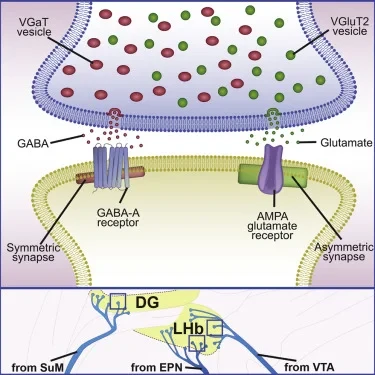
Optimal cognitive processing in the human prefrontal cortex requires a delicate physiological balance between excitatory drive and inhibitory control. Glutamate, the brain's primary excitatory neurotransmitter, governs synaptic plasticity, structural remodeling, working memory encoding, and long-term potentiation (LTP)-the fundamental cellular mechanism underlying learning and memory consolidation. Conversely, gamma-aminobutyric acid (GABA)-the primary inhibitory neurotransmitter-acts as a vital neural "brake," preventing excitotoxicity, suppressing background neural noise, and dampening acute stress responses.
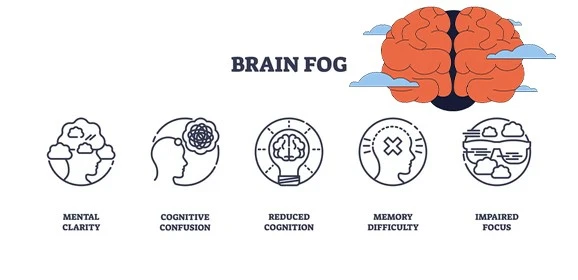
When cognitive demands exceed neurochemical reserves, this fragile equilibrium is disrupted, leading to what clinicians and researchers describe as "brain fog"-a state characterized by reduced processing speed, impaired executive control, and elevated baseline anxiety. Most traditional cognitive intervention strategies attempt to improve cognitive states by unilaterally accelerating neuronal firing rates. In contrast, modern neurochemical research highlights targeted small molecules capable of acting simultaneously on both ends of the neurochemical spectrum:
1. Positive Allosteric Modulation of Metabotropic Glutamate Receptors (mGluRs): Unlike ionotropic glutamate receptors (such as AMPA and NMDA)-which mediate rapid, direct synaptic transmission-metabotropic glutamate receptors (mGluRs 1–8) function as G-protein-coupled regulators. Positive allosteric modulation of this receptor family fine-tunes incoming excitatory signals, enhancing the signal-to-noise ratio during memory retrieval and complex problem-solving, all without triggering the excitotoxic cellular stress associated with NMDA-mediated signaling.
2. Upregulation of GABA<sub>B</sub> Receptors: Conventional sedatives or sleep aids often lead to the downregulation or desensitization of GABA receptors over time, resulting in tolerance and dependency. Conversely, chronic administration of certain piracetam-like derivatives has been shown to increase cortical GABA<sub>B</sub> receptor expression, binding affinity, and surface density. This physiological upregulation strengthens the brain's internal stress-buffering mechanisms, enabling sustained, calm focus without inducing sedation.
3. Enhancement of High-Affinity Choline Uptake (HACU): Beyond balancing amino acid neurotransmitters, this dual-action approach accelerates the rate-limiting step of acetylcholine synthesis in the cerebral cortex. By boosting high-affinity choline uptake into presynaptic cholinergic terminals, it ensures a steady supply of acetylcholine-a vital neurotransmitter responsible for attentional shifting, mental endurance, and spatial memory processing.
In contemporary biopharmaceutical manufacturing, chemical synthesis, and analytical testing laboratories, fasoracetam capsules-as well as the high-purity active pharmaceutical ingredient (API) in bulk powder form-serve as essential reference standards for evaluating the dynamics of mGluR modulation and the upregulation of GABA<sub>B</sub> receptors. Fasoracetam is a synthetic, investigational compound belonging to the "racetam" class of nootropics. Originally developed for the treatment of vascular dementia, its therapeutic focus was subsequently repurposed; it has since advanced into clinical trials for the treatment of attention-deficit/hyperactivity disorder (ADHD) and specific genetic neurodevelopmental conditions. Primary Mechanism of Action: Compared to traditional racetams (such as piracetam or aniracetam), fasoracetam possesses a unique pharmacological profile involving three key neurochemical pathways. It positively modulates all three groups of metabotropic glutamate receptors (mGluRs 1–8). A distinctive feature of fasoracetam is its ability to increase $\text{GABA}_\text{B}$ receptor density (expression levels) in the cerebral cortex. The $\text{GABA}_\text{B}$ signaling pathway regulates anxiety and inhibitory control, which may exert corresponding anxiolytic or mood-stabilizing effects. Like other racetams, fasoracetam enhances high-affinity choline uptake (HACU) and acetylcholine release in the cerebral cortex, thereby improving information processing speed, focus, and memory formation. High-quality capsule formulations are often used in standardized laboratory assays-such as those measuring HACU kinetics, receptor-binding affinity, and neuroprotective cellular models-providing researchers with the precise dosing, stability, and batch-to-batch consistency needed for reproducible *in vitro* and preclinical neurological studies.

Clinical Realities and Regulatory Frameworks
While both the scientific community and "biohacking" circles have shown keen interest in novel methods for optimizing executive function and stress resilience, neurobiology experts and regulatory bodies emphasize the critical importance of understanding safety limits and regulatory boundaries:
Genetic Dependency and Variability: Data from human clinical trials clearly indicate that an individual's genetic makeup strongly influences the cognitive and behavioral outcomes resulting from mGluR modulation. In healthy individuals lacking underlying mutations in the mGluR pathway or specific receptor defects, the significant cognitive enhancement observed in target clinical populations may not manifest.
While short-term clinical trials-evaluating daily doses reaching several hundred milligrams-have demonstrated good tolerability, comprehensive long-term toxicological data regarding daily self-administration in healthy populations remain limited. Exceeding recommended research thresholds may trigger adverse effects, including cholinergic headaches, transient fatigue, dizziness, and potential disruption of endogenous receptor homeostasis.
Compounds in this pharmacological class-such as fasoracetam-are subject to strict global regulatory classification, including in major jurisdictions like the United States and Europe. Consequently, access is legally restricted to certified laboratory research, analytical reference applications, and structured clinical development processes.

The Future of Targeted Neuro-Optimization
As neuroimaging, genetic sequencing, and molecular pharmacology advance, the traditional one-dimensional approach-relying on heavy central nervous system stimulation to boost productivity-is becoming increasingly obsolete. Emerging science on dual-receptor modulation shows that genuine cognitive enhancement doesn't require sacrificing neural stability in pursuit of extreme mental speed.
Although lifestyle factors-such as healthy sleep architecture, regular aerobic exercise, balanced micronutrient intake, and structured cognitive training-remain the indispensable foundation for lifelong brain health, research into targeted receptor modulation continues to evolve.