




An Analysis of Human Appetite and Metabolic Regulation Mechanisms
As glucagon-like peptide-1 (GLP-1) receptor agonists continue to reshape modern metabolic health management, one central question remains: what happens to body weight and appetite after treatment stops?
Recent clinical studies on incretin-mimetic drugs have revealed a noteworthy phenomenon: "metabolic rebound."
While the public focuses on the efficacy of rapid weight loss, biomedical researchers and pharmacologists are delving deeper-investigating the precise physiological feedback loops, changes in gastrointestinal motility, and receptor-binding mechanisms that regulate human metabolism during peptide drug administration and after discontinuation.
Physiological Roles of GLP-1 and the Incretin Effect
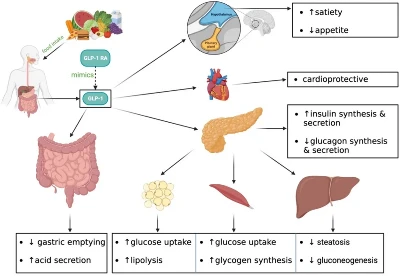
To understand the changes in weight dynamics following drug discontinuation, one must first understand the endogenous incretin pathway. Natural GLP-1 is a peptide hormone secreted by L-cells in the distal ileum and colon in response to nutrient intake. It plays a pivotal role in maintaining blood glucose homeostasis through several mechanisms:
Glucose-dependent insulin secretion: It binds to receptors on pancreatic $\beta$-cells, signaling insulin release only when blood glucose is elevated.
Postprandial glucagon suppression: It inhibits excessive glucagon secretion by pancreatic $\alpha$-cells after meals without impairing the natural counter-regulatory response during hypoglycemia.
Regulation of gastric motility: It slows gastric emptying, delaying nutrient absorption into the bloodstream.
Central appetite regulation: It crosses the blood-brain barrier and binds to hypothalamic receptors, promoting satiety and reducing neural reward signals associated with eating. However, endogenous GLP-1 has an extremely short biological half-life (typically less than two minutes) because it is rapidly degraded by dipeptidyl peptidase-4 (DPP-4) in the circulatory system.
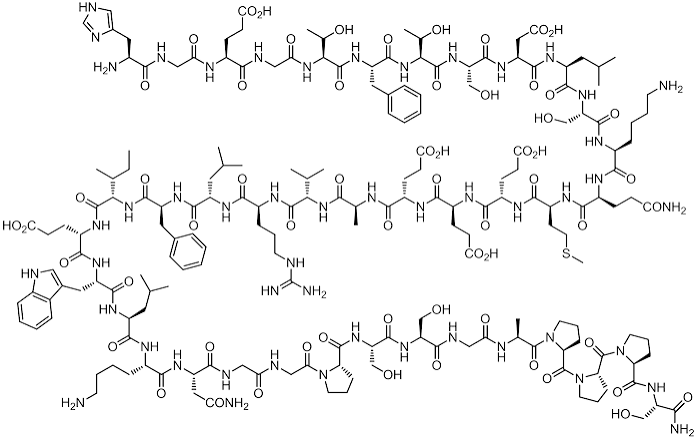
To overcome the physiological limitations of natural GLP-1, biopharmaceutical innovation turned to peptide engineering. A historic milestone in this field was the development of Exenatide, a synthetic 39-amino acid peptide structurally modeled after the naturally occurring exendin-4 peptide.
In the realms of biomanufacturing and drug development, Exenatide powder (CAS: 141758-74-9) plays a pivotal role as a key active pharmaceutical ingredient (API). Unlike natural incretin peptides, Exenatide's unique molecular sequence makes it inherently resistant to DPP-4 degradation.
This API is primarily supplied as a high-purity, lyophilized solid powder of Exenatide acetate, enabling formulators to develop both immediate-release products and sustained-release delivery systems based on poly(lactic-co-glycolic acid) (PLGA) microspheres. By maintaining a durable binding affinity for GLP-1 receptors, high-purity Exenatide can continuously activate satiety signals and delay gastric emptying.
Why Rebound Occurs: Physiological Mechanisms Following Treatment Cessation
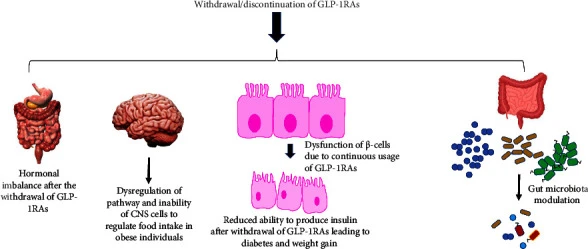
When patients discontinue GLP-1 receptor agonist therapy, the drug is cleared from the body, and artificial stimulation of the GLP-1 pathway diminishes. Understanding this transition helps explain why weight often rebounds after stopping the medication:
1. Normalization of Gastric Emptying Rates
During active treatment, slowed gastric emptying prolongs how long food stays in the stomach, sustaining physiological satiety signals. Once the peptide drug is discontinued, gastric motility returns to baseline levels. As a result, digestion accelerates, and hunger signals return to pre-treatment patterns.
2. Restoration of hypothalamic appetite regulation
Exogenous peptides sustain effects on the central nervous system's appetite-regulating centers. As receptor occupancy declines, natural hunger signals driven by ghrelin and neuropeptide Y (NPY) re-emerge. Without corresponding lifestyle or dietary adjustments, individuals often increase caloric intake.
3. Adaptive changes in metabolic rate
During periods of caloric restriction, the body undergoes an "adaptive thermogenesis" response, reducing overall resting energy expenditure (REE). Once the appetite-suppressing effects of peptide-based drugs wear off, if patients revert to their previous dietary habits while their metabolic rate remains suppressed, weight regain may accelerate.
Beyond Incretin-Based Therapies: Sustaining Metabolic Health
Clinical consensus emphasizes that incretin-mimetic drugs are biological interventions, not measures that induce permanent physiological changes. Achieving long-term glycemic control and weight maintenance requires a comprehensive, multidimensional strategy:
1. Gradual Tapering Strategy: Medical monitoring during the discontinuation phase helps patients progressively adapt to the return of appetite signals.
2. Nutritional Optimization: Transitioning to a high-protein, high-fiber diet can physiologically delay gastric emptying-independent of pharmacological intervention-thereby supporting the body's natural satiety signals.
3. Preserving Lean Body Mass: Combining peptide therapy with resistance training helps counteract muscle loss, ensuring the maintenance of high resting metabolic efficiency even after treatment concludes.
Peptide Research and Formulation Standards
As global demand for metabolic therapies surges, the biopharmaceutical supply chain remains focused on the purity, stability, and formulation flexibility of therapeutic peptides. High-quality peptides-such as Exenatide-continue to drive next-generation metabolic research and drug-delivery technologies, as well as comparative clinical studies exploring neuroprotective and vascular biological pathways.
A deep understanding of the fundamental biological mechanisms of GLP-1 receptor agonists empowers clinicians and patients to make informed decisions, ensuring that therapeutic benefits translate into sustainable, long-term metabolic health outcomes.
For pharmaceutical R&D firms and medical aesthetics or bioproduct laboratories, the transition from upstream pharmacological mechanism research to commercialization often hinges on two core challenges: the physicochemical stability of raw materials and the design of drug delivery systems.
Given that bioactive peptides are highly sensitive to environmental factors-such as temperature fluctuations, conformational changes caused by shear stress, and enzymatic degradation-the performance of the active pharmaceutical ingredient (API) regarding purity, batch-to-batch stability, and solubility directly determines the bioavailability of the final oral or injectable formulation. For instance, when developing long-acting sustained-release microspheres (such as PLGA-based systems) or novel injection pens, raw materials must meet stringent pharmacopeial standards (e.g., USP/EP grades) for solubility under aseptic conditions, residual solvent control, and crystalline form.

This explains why global pharmaceutical companies impose rigorous compliance requirements for high-purity Exenatide powder, specifically concerning Certificates of Analysis (COA), HPLC purity data, and the characteristics of the lyophilized powder. High-quality raw materials not only ensure reproducible data for cutting-edge research on neuroprotection, metabolic mechanisms, and drug delivery systems but also lay a solid foundation for subsequent industrial-scale production.