






How hard did the ancients try to treat hair loss?
Hair loss may be one of the most worrying things for humans.
Many famous people in history have suffered from hair loss. In the West, there is the famous Hair Loss Alliance, politician Churchill, astronomer Galileo, inventor Edison, physicist Maxwell, psychologist Freud. In ancient and modern times, people at home and abroad have come up with all kinds of weird methods to keep the hair on their heads.
More than 3,000 years ago, there was a prescription for treating baldness in ancient Egypt. It was to mix iron, red lead, onion, honey and alabaster, and then recite a magical spell about the sun before applying the mixture to the scalp. Hippocrates, a famous physician in ancient Greece, tried many ways to save his increasingly thinning hair. He applied a mixture of pigeon droppings, horseradish, beetroot and various spices on his head, but it didn't work at all, and his hair eventually left him. In order to cover his bald head, the famous Caesar of ancient Rome grew his hair long at the back and combed it to the top, but the effect was not very good, so he simply wore a laurel wreath to cover his bald head. The laurel wreath later became a symbol of masculinity and power. Ancient China was even more concerned about hair. The traditional concept was that the hair on the body was given by the parents, and the hair could not be easily moved. Even shaving the hair became a tradition. As a punishment, humans have been fighting against hair loss for thousands of years. It was not until the first half of the 20th century that the secret was discovered. At that time, a professor at Yale University School of Medicine found that people who were castrated before puberty had low testosterone, less body hair, and most importantly, no hair loss. When these people were injected with testosterone, they not only regained the characteristics of mature men, but also people with family hair loss began to lose their hair. This experiment discovered two conditions for hair loss: testosterone and genetic basis.

Genetics are innate and we cannot change them. The point of testosterone has become a direction for treating hair loss. For example, finasteride, a drug originally used to treat prostate hyperplasia, can reduce dihydrotestosterone in the human body by inhibiting the production of 5a-reductase in the human body. People found that hair loss patients who took this drug actually grew hair by the way.
In addition to drug treatment, there is also the familiar "hair transplantation", which originated from a doctor's attempt in the 1950s. After transplanting hair follicles from the side of the scalp to the bald area, he found that the hair follicles could still grow normally, which showed that each hair follicle was independent. Since then, hair transplantation has become a routine treatment for baldness.
After decades of development, we now have a relatively effective treatment system to deal with hair loss: drug treatment, hair transplantation, laser treatment, autologous platelet-rich plasma treatment (PRP).
With the changes and influence of modern work rhythm, lifestyle, mental stress and other factors, the trend of younger hair health problems and younger hair loss is becoming increasingly obvious.

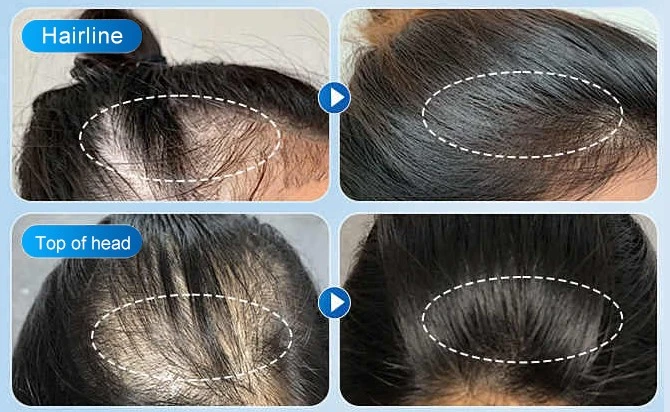
Kopexil powder, also known as Aminexil, is a patented hair growth molecule. it is designed to address hair thinning and promote the growth of stronger, healthier hair.Kopexil works through various mechanisms to enhance hair anchorage ,improve blood circulation to the hair follices, stimulate hair growth by targeting dermal papilla cells, counteract fibrosis in the scalp, and protect against the damaging effects of DHT(dihydrotestosterone) to prevent hair loss. its comprehensive approach makes it a valuable ingredient in products aimed at promoting growth and reducing thinning.
lt is commonly found in topical solutions and shampoos designed to promote hair development and stop its loss. it is known to help strengthen hair follicles, improve scalp health, and stimulate hair growth in individuals experiencing hair thinning or loss.Here are the key uses:
1.Hair Growth: lt is used to stimulate growth and promote the development of healthier, thicker hair.
2.Hair Loss Prevention: lt is effective in bolstering hair follicles to stop hair loss and reducing hair fall.
3.Scalp Health: it can improve scalp health by enhancing blood circulation, which aids in nourishing hair roots and promoting healthy hair growth.
4.Hair Thickening:Regular use of Aminexil can lead to thicker and fuller hair by supporting the growth of new hair strands.
5.Hair Care Maintenance: lt is often incorporated into hair care products to maintain overall hair health and vitality.
In essence,Aminexil acts as a beneficial ingredient in hair care formulations aimed at improving the quality,thickness, and growth of hair.
Tips for hair care:
1. Be gentle with your hair
Don't pull your hair too hard (such as tying braids too tight) Use a wide-tooth comb to comb your hair
2. Protect your hair from the sun
Ultraviolet rays can damage scalp cells, so remember to wear a hat when exposed to the sun for a long time
3. Quit smoking
Studies show that smoking is related to male baldness
4. Don't dye or perm your hair frequently
That will make your hair more fragile
5. Relax and reduce stress
Exercise appropriately and maintain a good work and rest schedule
I wish you and your hair will never be separated!!