




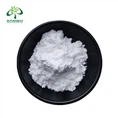
Chondroitin sulfate is a naturally occurring glycosaminoglycan (GAG) widely known for its important role in maintaining the structure, elasticity, and hydration of cartilage and connective tissue. High-purity chondroitin sulfate powder can be extracted from animal sources such as bovine, swine, and marine cartilage, and is widely used in dietary supplements, pharmaceutical research, and biomaterials.
What is chondroitin sulfate made of
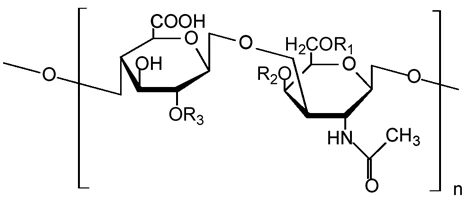
Chondroitin sulfate powder is a naturally occurring glycosaminoglycan (GAG) found in the extracellular matrix of connective tissues, particularly cartilage, tendons, ligaments, skin, and blood vessels. It consists of long chains of repeating sugar molecules and plays a crucial role in maintaining the structure, elasticity, and hydration of cartilage. Chemically, chondroitin sulfate is composed of repeating disaccharide units, including D-glucuronic acid (GlcA) and N-acetyl-D-galactosamine (GalNAc). These sugar units are linked together in an alternating sequence, and the degree of sulfation of the galactosamine residues varies, most commonly at position 4 (chondroitin sulfate-4) or position 6 (chondroitin sulfate-6). The degree and pattern of sulfation of chondroitin sulfate affect its biological properties, including its interactions with proteins and its ability to retain water in cartilage. Commercially, chondroitin sulfate is primarily extracted from animal cartilage, including bovine (cattle) trachea or cartilage, porcine (pig) cartilage, chicken cartilage, shark cartilage, and marine fish cartilage.
After extraction, the raw material is purified and processed to produce chondroitin sulfate powder, which is used in dietary supplements, pharmaceutical research, and biomaterial applications. In research and nutritional applications, chondroitin sulfate has been extensively studied for its potential role in supporting joint health, maintaining cartilage integrity, promoting connective tissue hydration, and helping to maintain normal joint function. It is also frequently used in combination with glucosamine in joint health formulations.If you are seeking a reliable supplier or require practical application solutions for peptide raw materials, please feel free to contact Xi'an Sonwu.
What is chondroitin sulfate good for
Chondroitin sulfate is best known for supporting joint and cartilage health. As a natural component of connective tissue, it helps maintain the structure, elasticity, and hydration of cartilage, making it one of the most widely studied ingredients in joint health research and dietary supplements.
Potential benefits of chondroitin sulfate include:
Supporting joint health: Chondroitin sulfate helps maintain the integrity of cartilage, a smooth connective tissue that cushions joints and allows for free movement.
Promoting cartilage hydration: Its strong water-retention capacity helps cartilage retain moisture, thereby improving its elasticity and ability to absorb mechanical stress.
Potentially improving joint comfort and mobility: Clinical studies have shown that long-term chondroitin sulfate supplementation may help reduce joint discomfort and improve physical function, especially beneficial for patients with osteoarthritis.
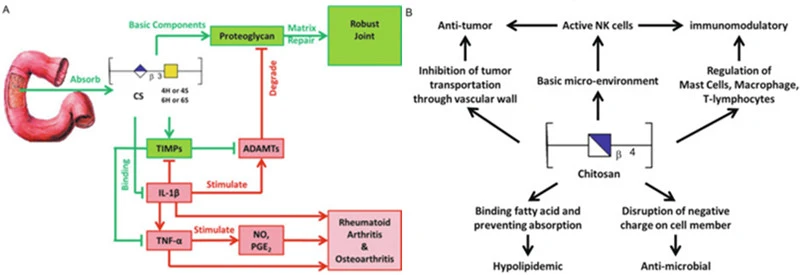
Supporting healthy cartilage metabolism: Studies have shown that chondroitin sulfate may help regulate enzymes involved in cartilage renewal while supporting the production of proteoglycans and collagen (key structural components of cartilage).
Potentially helping to slow cartilage degeneration: Some studies suggest that chondroitin sulfate may reduce the breakdown of cartilage tissue, but the extent of this effect varies across studies. Supports connective tissue health: In addition to joints, chondroitin sulfate is a natural component of tendons, ligaments, skin, and blood vessel walls, helping to enhance tissue strength and flexibility.
Widely used in combination preparations: Because chondroitin sulfate has complementary effects with glucosamine, collagen, hyaluronic acid, or MSM in supporting connective tissue, it is often added to joint health supplements.
Research and Safety: Chondroitin sulfate has been extensively studied and is generally considered well-tolerated when used as directed. While there is evidence that chondroitin sulfate may have a slight benefit for some patients with osteoarthritis, clinical trial results are mixed, and its efficacy may depend on factors such as product quality, dosage, and duration of use.
What is the difference between glucosamine sulfate and chondroitin sulfate?
Glucosamine sulfate and chondroitin sulfate are both natural active ingredients widely used in joint health, but their mechanisms of action differ. Glucosamine sulfate is a natural amino monosaccharide and an important precursor for the synthesis of glycosaminoglycans (GAGs) and proteoglycans. It provides building blocks for cartilage, promotes the formation and repair of the cartilage matrix, thereby helping to maintain joint structural integrity, improve joint flexibility, and support long-term cartilage health. Commercially available glucosamine is typically derived from crustacean shells or produced through microbial fermentation.
Chondroitin sulfate, on the other hand, is a naturally occurring glycosaminoglycan found in cartilage and connective tissue. It is an important structural component of cartilage, possessing strong water-absorbing capacity. This helps cartilage retain moisture, elasticity, and cushioning properties, thereby improving joint resistance to pressure and lubrication. Furthermore, research indicates that chondroitin sulfate helps maintain normal cartilage metabolism and may slow down cartilage degradation. Because they work through two different pathways-promoting cartilage formation and maintaining cartilage structure and hydration-they are often used together in joint health supplements to provide more comprehensive joint support and help improve joint function, mobility, and cartilage health.

Xi'an Sonwu can provide you with raw chondroitin sulfate, chondroitin sulfate capsules, and formula; if you are interested, please get in touch with Xi'an Sonwu.
Email: sales@sonwu.com