



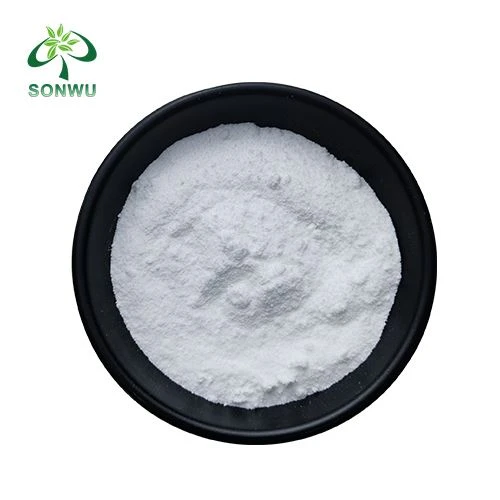



Xi'an Sonwu Biotech Co., Ltd. is one of the most professional manufacturers and suppliers of procaine powder in China. We warmly welcome yuo to wholesale bulk procaine powder for sale here from our factory. Quality products and reasonable price are available.
Procaine
Procaine Powder is used for reducing painful symptoms of various types, and it is widely used in infiltration, block, epidural, and spinal cord anesthesia, and for potentiating activity of basic drugs during general anesthesia. It is a short-acting local anesthetic. It is most commonly used in dental procedures to numb the area around a tooth and is also used to reduce the pain of intramuscular injection of penicillin. It acts mainly as a sodium channel blocker. It may cause allergic reactions. The most common synonyms of procaine are novocaine, adrocaine, impletol, and melkaine.
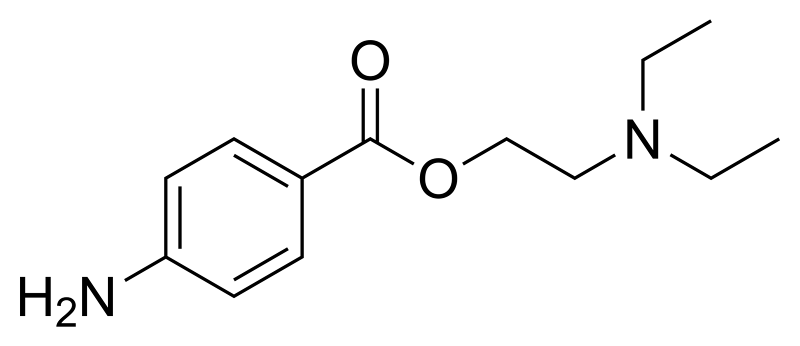
Procaine was first synthesized in 1905, shortly after amylocaine. It was created by the chemist Alfred Einhorn who gave the chemical the trade name Novocaine, from the Latin nov- (meaning "new") and -caine, a common ending for alkaloids used as anesthetics. It was introduced into medical use by surgeon Heinrich Braun.
Prior to the discovery of amylocaine and procaine, cocaine was a commonly used local anesthetic. Einhorn wished his new discovery to be used for amputations, but for this surgeons preferred general anesthesia. Dentists, however, found it very useful.
COA
|
Characteristic/method |
Specification |
Result |
|
Aρpearance |
White Powder |
Conforms |
|
Odor |
Characteristic |
Conforms |
|
Assay |
≥99% |
99.18% |
|
Solubility |
Soluble in water |
Conforms |
|
Loss on Drying |
≤0.5% |
0.27% |
|
Heavy Metals |
≤15ppm |
Conforms |
|
As |
≤2.5ppm |
Conforms |
|
Pb |
≤2.5ppm |
Conforms |
|
Hg |
Negative |
Negative |
|
Microbiological |
||
|
Total Plate Count |
≤1000cfu/g |
Conforms |
|
Yeast & Mold |
≤100cfu/g |
Conforms |
|
Salmonella |
Negative |
Negative |
|
E.Coli |
Negative |
Negative |
|
Conclusion |
Conforming to Enterprise Standard |
|
Where To Buy Procaine
Xi'an Sonwu Biotech Co. Ltd. has rich experience in the global trade and health industry. Insisting on faith-based and quality first is our company’s principle. We strictly control product quality, which means selection starts from raw materials. Besides, we handle every detail and reduce the cost to the maximum extent, then our customers can get cost-effective products. Based on these, customers have given much good feedback to our products. So you can look for Xi'an Sonwu Biotech Co. Ltd. when you want to buy Procaine.
Xi'an Sonwu completely makes sure of the product’s quality, so samples can be supplied. Here is the quantity.
|
Form |
Sample Amount |
The Minimum of Quantity |
|
Powder |
500g |
1kg |
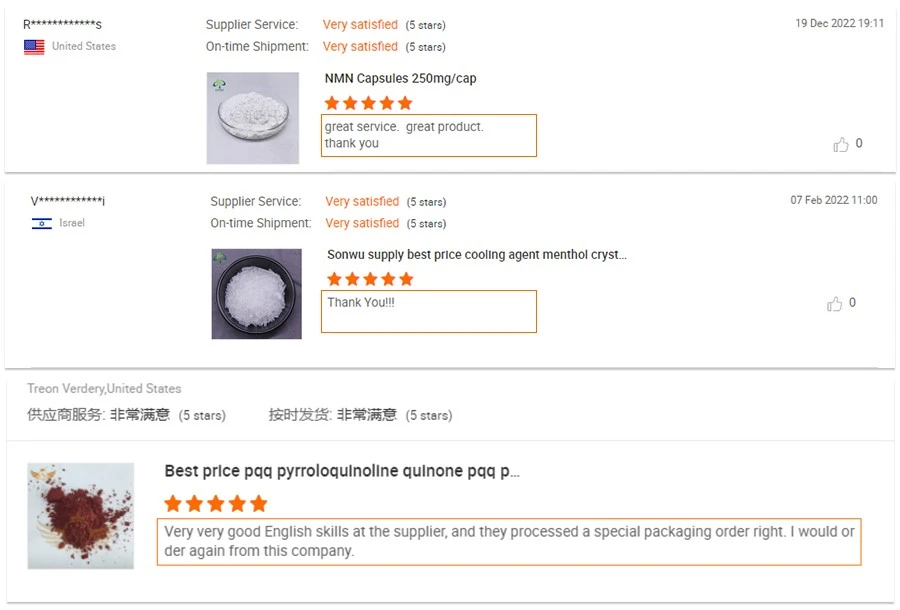
Customers’s Good Comment
Pharmacodynamics
Procaine is an anesthetic agent indicated for the production of local or regional anesthesia, particularly for oral surgery. Procaine (like cocaine) has the advantage of constricting blood vessels which reduces bleeding, unlike other local anesthetics like lidocaine. Procaine is an ester anesthetic. It is metabolized in the plasma by the enzyme pseudocholinesterase through hydrolysis into para-aminobenzoic acid (PABA), which is then excreted by the kidneys into the urine.

Procaine V.S Lidocaine
Procaine and Lidocaine are both local anesthetics that work by blocking sodium channels and inhibiting nerve impulses. However, there are some differences between these two drugs in terms of their pharmacological properties, clinical use, and side effects:

Pharmacology: Procaine is an ester-type local anesthetic while Lidocaine is an amide-type local anesthetic. Procaine has a shorter duration of action and a slower onset of action than Lidocaine. Lidocaine is more potent and has a faster onset of action.
Clinical use: Procaine is used for short-term or minor surgical procedures, dental procedures, and relief of pain associated with various conditions. Lidocaine is used for more extensive surgical procedures, such as epidural, spinal, or regional anesthesia, and post-operative pain management. Lidocaine is also used to treat arrhythmias, including ventricular tachycardia and fibrillation.

Side effects: Both Procaine and Lidocaine may cause allergic reactions, but the incidence is low. Procaine may cause nausea, vomiting, and headache, while Lidocaine may cause dizziness, drowsiness, and confusion at high doses. Lidocaine has a higher risk of causing serious side effects, especially if accidentally injected into a blood vessel. These effects may include central nervous system toxicity, cardiovascular collapse, and respiratory depression.

In summary, Procaine and Lidocaine are two similar yet distinct local anesthetics with different pharmacological properties, clinical uses, and safety profiles. The choice of which drug to use depends on the nature and duration of the surgical procedure, the patient's medical history, and other individual factors, and should be made by a healthcare professional based on careful consideration of these factors.
Procaine V.S Bupivacaine
Procaine and bupivacaine are both local anesthetics, but they have some differences in terms of their pharmacological properties, clinical use, and side effects.

Pharmacology: Procaine and bupivacaine belong to different classes of local anesthetics. Procaine is an ester-type local anesthetic that blocks sodium ion channels in the nerve membrane, inhibiting nerve impulse transmission and producing a short-acting local anesthetic effect. Bupivacaine belongs to the amide-type local anesthetics, which also block sodium ion channels, but has a slower onset and longer duration of action compared to procaine.
Clinical use: Procaine is mainly used for short-term or minor surgical procedures, dental procedures, and relief of pain associated with various conditions. In contrast, Bupivacaine is usually used for longer-lasting anesthesia in more extensive surgical procedures, such as epidural or spinal anesthesia, and post-operative pain management.

Side effects: Due to its short duration of action and rapid metabolism, procaine is generally considered safe and well-tolerated. However, it may cause allergic reactions and adverse effects such as nausea, vomiting, and headache. Bupivacaine has a higher risk of causing serious side effects, especially if accidentally injected into a blood vessel. These effects may include central nervous system toxicity, cardiovascular collapse, and respiratory depression.
In summary, Procaine and bupivacaine are both local anesthetics with different pharmacological properties, clinical uses, and safety profiles. The choice of the local anesthetic depends on the nature and duration of the surgical procedure, the patient's medical history, and other individual factors, and should be made by healthcare professionals based on careful consideration of these factors.
Mechanism Of Action
Procaine is a local anesthetic that works by blocking nerve impulses through the inhibition of voltage-gated sodium channels in the nerve membrane. Sodium channels are responsible for the rapid influx of sodium ions, which generates and propagates the action potential in nerve fibers.
Procaine reversibly binds to the extracellular portion of sodium channels, causing a decrease in the sodium ion influx and slowing the rate of depolarization. This leads to a reduction in the amplitude and frequency of action potentials, resulting in a temporary loss of sensation in the area where the drug is applied or injected.

Procaine does not cross the blood-brain barrier well, so it is unlikely to cause central nervous system toxicity. It has a shorter duration of action than other local anesthetics, such as bupivacaine, making it suitable for short-term procedures or minor surgery.
In summary, Procaine works by blocking sodium channels in nerve membranes, inhibiting nerve impulse transmission, and producing a temporary loss of sensation in the localized area where it is applied or injected.
What Other Drugs Will Affect Procaine
There are several drugs that may interact with Procaine Powder, which can affect its effectiveness or increase the risk of side effects. Some of these drugs include:
Other local anesthetics: Concurrent use of Procaine with other local anesthetics may increase the risk of toxicity and side effects.
Antiarrhythmic drugs: Some antiarrhythmic medications such as lidocaine or mexiletine may increase the risk of seizures or heart rhythm abnormalities when used together with procaine.
Beta-blockers: Beta-blockers, which are used to treat high blood pressure or heart conditions, can decrease the effectiveness of procaine and increase the risk of toxicity.
Anticoagulants: Certain anticoagulant drugs such as warfarin, heparin, or aspirin may increase the risk of bleeding and hemorrhage in patients receiving procaine.
Barbiturates: Concurrent use of procaine with barbiturates may increase the risk of central nervous system toxicity.
Drugs other than those listed here may also interact with procaine. Talk to your doctor and pharmacist before taking or using any other prescription or over-the-counter medicines, including vitamins, minerals, and herbal products.
Adverse Effects
Application of procaine leads to the depression of neuronal activity. The depression causes the nervous system to become hypersensitive, producing restlessness and shaking, leading to minor to severe convulsions.[citation needed] Studies on animals have shown the use of procaine led to the increase of dopamine and serotonin levels in the brain. Other issues may occur because of varying individual tolerance to procaine dosage. Nervousness and dizziness can arise from the excitation of the central nervous system, which may lead to respiratory failure if overdosed. Procaine may also induce the weakening of the myocardium leading to cardiac arrest.

Procaine can also cause allergic reactions causing individuals to have problems with breathing, rashes, and swelling. Allergic reactions to procaine are usually not in response to procaine itself but to its metabolite PABA. Allergic reactions are in fact quite rare, estimated to have an incidence of 1 per 500,000 injections. About one in 3000 white North Americans is homozygous (i.e. has two copies of the abnormal gene) for the most common atypical form of the enzyme pseudocholinesterase, and does not hydrolyze ester anesthetics such as procaine. This results in a prolonged period of high levels of the anesthetic in the blood and increased toxicity.
The Side Effects Of Procaine
Procaine is generally well-tolerated by most people, but like any medication, it can cause side effects. Some of the common side effects of procaine include:
Pain, redness, or swelling at the site of injection
Itching or rash
Nausea or vomiting
Dizziness or lightheadedness
Headache
Blurred vision or hearing loss
Tremors or seizures (rare)
Allergic reactions such as hives, difficulty breathing, or swelling of the face, lips, tongue, or throat (rare)
Procaine is less likely to cause serious side effects than other local anesthetics such as bupivacaine, but it can cause CNS toxicity if used in high doses or if it enters the bloodstream accidentally. Central nervous system toxicity may include symptoms such as anxiety, restlessness, confusion, tremors, seizures, respiratory depression, and cardiovascular collapse. These side effects are more likely to occur in elderly patients or those with liver or kidney disease.

In summary, Procaine is a safe and effective local anesthetic that has a low risk of side effects. However, patients should be aware of the possibility of allergic reactions, CNS toxicity, and other potential side effects and should report any unusual symptoms to their healthcare provider immediately.
How Long Does Procaine Take To Work
The onset of action of Procaine varies depending on the route of administration and the location of the injection. Typically, Procaine begins to take effect within 1 to 5 minutes when administered via injection into the skin or soft tissues.
When used as a spinal or epidural anesthetic, the onset of action may take longer, usually around 10-20 minutes, before the patient feels numbness in the lower body. The duration of action varies depending on the dose, route of administration, and individual factors, but usually lasts from 30 minutes to two hours.
It is important to note that different patients may respond differently to Procaine, depending on their age, weight, health status, and other factors. Therefore, the duration of action may vary from patient to patient.

In summary, Procaine has a relatively rapid onset of action when injected into the skin or soft tissues, usually within 1-5 minutes. However, the onset may take longer when used as a spinal or epidural anesthetic. The duration of action is typically short, lasting from 30 minutes to two hours.
Precautions
Before using Procaine, talk to your healthcare provider if you have
liver problems;
bleeding or blood clotting problems;
heart problems;
neuromuscular disease such as myasthenia gravis;
or other serious medical conditions.
You may not be able to use procaine, or you may require a dosage adjustment or special monitoring during treatment.
It is not known whether procaine will be harmful to an unborn baby. Do not use procaine without first talking to your doctor if you are pregnant or could become pregnant during treatment. It is not known whether procaine passes into breast milk. Do not use procaine without first talking to your doctor if you are breastfeeding a baby.
Procaine Pharmacokinetics & Metabolism
Procaine is a drug with limited distribution and tissue uptake and a short duration of action: during a continuous intravenous infusion of 2% procaine, the steady-state plasma level is achieved within 20 to 30 minutes. Following the termination of the administration, drug concentration decreases rapidly, with a distribution half-life (t1/2 alpha) of 2.49±0.36 minutes and an elimination half-life (t1/2 beta) of 7.69±0.99 minutes. At the systemic level, procaine is hydrolyzed to diethyl-amino-ethanol (DEAE) and para-aminobenzoic acid (PABA), as primary metabolites, by the enzyme pseudocholinesterase [50] (Figure 1). In different organs, procaine is hydrolyzed under microsomal carboxylesterases. DEAE displays local anesthetic activity.
Procaine hydrolysis represents an important feature that could support some of its effects on cellular functions and metabolism, as the primary and secondary metabolites could have additional pharmacologic actions or participate as precursors in the synthesis of essential biomolecules. Kietzmann and Kaemmerer (1989) tested the influence of orally-administrated procaine hydrochloride on intermediary metabolism in rats and pointed out the fact that the ratio of acetyl coenzyme A to coenzyme A clearly was enhanced in the liver and, to a minor extent, in the cerebellum. Also, procaine hydrochloride, GH3, as well as DEAE increased, in a dose- and time-dependent mode, the hepatic incorporation rate of amino acids in the protein, while PABA yielded no effect.
A very attractive hypothesis, which needs more studies and scientific evidence, is the second stage of procaine metabolism (remarkable from the pharmacodynamics viewpoint): the possible generation of ethanolamine from DEAE. Ethanolamine is a possible precursor in the biosynthesis of membrane phospholipids (phosphatidylethanolamine and phosphatidylcholine), which can be converted into the neurotransmitter acetylcholine (Ach).
How To Use Procaine
The use of procaine should be strictly under the guidance and supervision of a licensed healthcare professional, and the dosage and duration of use should be determined based on the individual patient's condition and response to treatment.
In general, procaine can be administered by injection into the affected area, typically in a clinical setting. The dosage and frequency of injection will depend on the severity and location of the condition being treated.
It is important to follow the instructions provided by the healthcare professional carefully and inform them if any side effects or allergic reactions occur during or after the administration of procaine. Overdose or misuse of procaine can be dangerous and may cause serious side effects, including seizures, respiratory depression, or cardiac arrest.
Factory
1. Xi'an Sonwu Biotech Co., Ltd has its own factory, so it has adequate stock. Also, Xi'an Sonwu has a clean and tidy production department with advanced equipment. With the lead of Xi'an Sonwu, researchers are constantly developing new products to meet customers' needs.
2. Xi'an Sonwu Biotech Co., Ltd has advanced test equipment and professional testers, which all show that Xi'an Sonwu aims to supply accurate and effective data and good service.


Certificate

Package

Logistics Update

In addition to guaranteeing product quality, the other most vital thing is clients could receive the goods smoothly. So, Xi’an Sonwu supplies all kinds of couriers according to different needs.

FAQ
1. How to contact Xi'an Sonwu Biotech Co., Ltd.?
You can contact me by email, telephone number, or social media.
2. How to make sure the quality of the product?
We test each batch, so can supply COA for customers. Besides, our products pass the test: HPLC, UV, GC, TLC, etc. And we also cooperate with third parties, like, SGS.
3. How to pack and store?
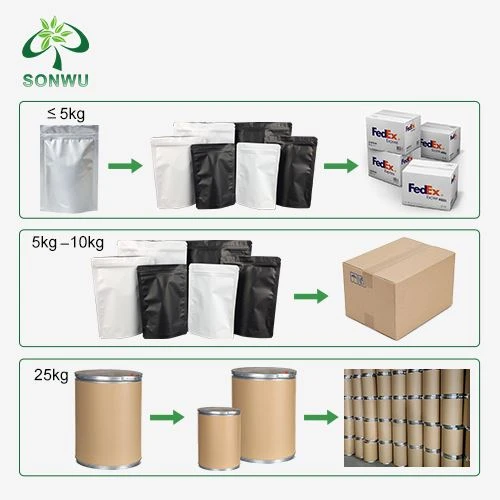
Pack: Vacuum sealed foil packaging & Sealed export-grade drum or pack according to customers' needs.
Storage: Keep it in a dry and cool place, and make it avoid strong light and heat.
And if you want to know the Procaine powder price, please contact XI’an Sonwu Biotech Co., Ltd.
Email: sales@sonwu.com
Hot Tags: procaine powder, China, suppliers, manufacturers, factory, wholesale, buy, price, bulk, pure, raw, supply, for sale, Urokinase Powder, Adenosine Monophosphate Powder, Pure Pregabalin Powder, Deazaflavin powder, NAD Capsule, Paliperidone Powder


