





Short-form videos have become an integral part of our daily lives. A few minutes spent scrolling through TikTok, Instagram Reels, or YouTube Shorts can easily turn into an hour of continuous viewing. While these platforms offer entertainment and quick access to information, some people find that without frequent digital stimulation, they struggle increasingly to focus on work, complete demanding tasks, or maintain motivation.
This experience raises an important question: Does excessive exposure to short-form video content alter the brain's reward system, making everyday activities feel less fulfilling?
Neuroscience offers some clues. The brain's reward circuitry-which involves dopamine signalling, the prefrontal cortex, and interconnected regions responsible for motivation and learning-is highly adaptive. Repeated experiences can shape how this circuitry responds to rewards, attention, and effort. However, this same adaptability also means that behavioural patterns can be reshaped through new experiences, environmental adjustments, and neuroplasticity. Rather than asserting that short-form videos cause permanent brain damage, it is more scientifically accurate to examine how repetitive digital stimulation affects reward mechanisms-and how the brain gradually recalibrates when these patterns change.
Why do short-form videos diminish the sense of achievement in daily work?
To understand why scrolling through short-form videos can become difficult to control, researchers first look at how the brain processes rewards.
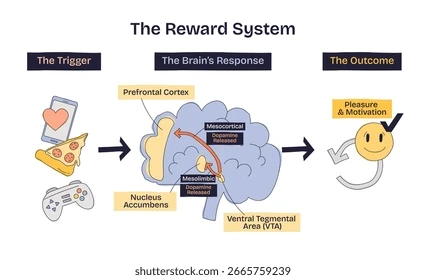
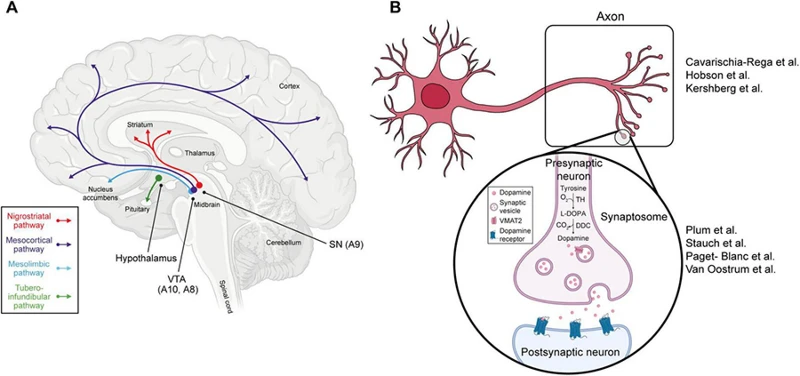
The brain's reward system is not a single structure, but a network that includes the ventral tegmental area (VTA), the nucleus accumbens, the prefrontal cortex, and other interconnected regions. Together, these areas regulate motivation, reward anticipation, learning, decision-making, and goal-directed behaviour.
Short-form video platforms create an environment where content is refreshed rapidly, allowing users to access new material with minimal effort. Instead of actively searching for entertainment, users are served a continuous stream of personalised content, curated by algorithms based on their past interactions, watch time, and engagement patterns. This creates a series of unpredictable rewards.
From the perspective of behavioural neuroscience, this pattern resembles "variable reinforcement"-a scenario where rewards appear unpredictably. This mechanism makes behaviours particularly persistent, as users keep watching in anticipation of the next reward.
Importantly, this does not mean that every short video triggers an extraordinary surge of dopamine, nor does it imply that watching such videos automatically leads to addiction.
A growing body of research is exploring the relationship between short-video consumption and cognitive ability.
A systematic review and meta-analysis published in *Psychological Bulletin* in 2025-covering 71 studies and 98,299 participants-found that higher levels of short-video consumption are associated with a more pronounced decline in cognitive function, with particularly strong correlations observed in attention and inhibitory control.
1. These findings may help explain why some frequent consumers of short videos struggle to focus on traditional work tasks.
Compared to short videos, many professional tasks offer only delayed feedback. Writing reports, analysing data, acquiring technical skills, or completing complex projects require sustained attention before any meaningful results can be seen.
The contrast is stark: digital entertainment provides frequent, rapid shifts in stimulation, whereas effective work often demands patience, deep focus, and a tolerance for temporary boredom.
Over time, individuals may become accustomed to constantly switching between rapidly changing sources of information. Consequently, returning to tasks that require sustained attention can feel exceptionally demanding.
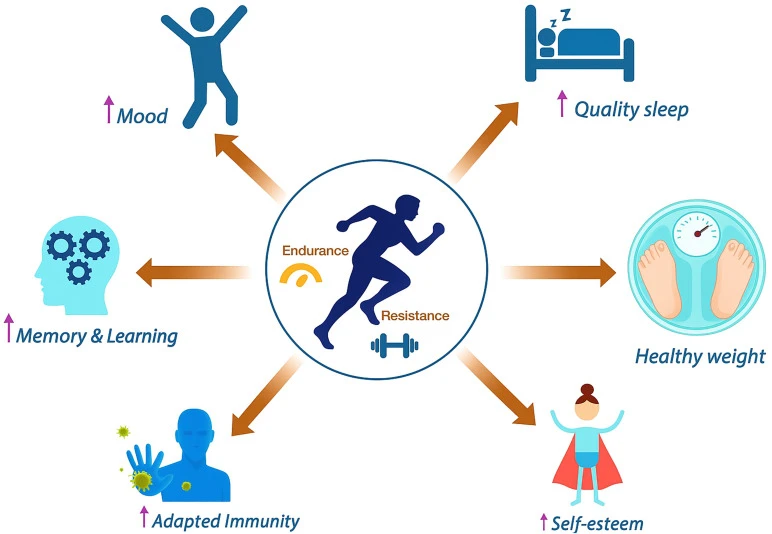
2. Restoring Natural Reward Experiences Through Physical Activity
Exercise is another significant area of focus in neuroscience research.
Physical activity influences biological systems linked to motivation, mood, and cognitive function, including dopamine signalling, neurotrophic factors, and neuroplasticity.
For instance, brain-derived neurotrophic factor (BDNF) supports neuronal survival, synaptic plasticity, and processes related to learning and memory.
Research indicates that regular exercise can modulate BDNF signalling and contribute to brain health. However, it would be inaccurate to claim that exercise can directly reverse the changes in reward circuitry caused by short-form video consumption.
3. Ensuring Adequate Sleep and Reducing Chronic Stress
Sleep is essential for memory consolidation, emotional regulation, and proper brain function.
Watching short-form videos late at night disrupts sleep patterns: it extends screen time, delays bedtime, and exposes users to content that triggers emotional fluctuations just when they should be preparing for rest.
Chronic stress can also affect the neural systems associated with motivation and executive control.
4. Cultivating Mindful Digital Consumption
A 2024 meta-analysis-covering 33 studies with a total of 16,233 participants-found that problematic short-form video use is often linked to underlying motivations such as escapism, stress relief, the pursuit of novelty, and self-compensation. Among these, "escapism" showed the strongest association with problematic usage.
Ultimately, the goal is not to abandon all digital entertainment, but to regain the power of choice-deciding for ourselves when to engage with digital content, rather than letting "habitual scrolling" dictate how our attention is distributed throughout the day.
9-Methyl-9H-β-carboline (9-Me-BC) is a synthetic β-carboline compound. It has garnered significant attention in neuroscience for its potential impact on dopaminergic neurons and dopamine-related signalling pathways.
Research has explored its potential effects on neuronal function, neurotrophic pathways, and cellular mechanisms associated with neuroprotection. Scientists are particularly interested in how 9-Me-BC influences the maintenance and function of dopaminergic neurons-the neurons responsible for producing dopamine.
Unlike traditional stimulants, which primarily act by modulating neurotransmitter release, 9-Me-BC is being studied for its potential interaction with a broader range of neuronal and neuroprotective mechanisms.
Its research implications span several areas, including dopamine signalling, neuroplasticity, and neuronal resilience. Current evidence is derived primarily from preclinical studies.
A Broader Perspective: A More Adaptable Brain
Short-form videos are unlikely to disappear from modern life. Thanks to their convenience and entertainment value, they have become an integral part of our digital landscape.
Nevertheless, the scientific community's growing focus on "reward processing," "dopamine signaling," and "neuroplasticity" offers a more constructive lens for understanding the relationship between digital habits and motivation.
While researchers have yet to confirm that reducing short-form video consumption can directly "repair" the brain's reward circuitry, the evidence does underscore the importance of maintaining healthy attention habits and a balanced digital lifestyle. For those who find themselves spending more time on screens than intended-and struggling to focus on daily tasks-an effective starting point may be surprisingly simple: reduce unnecessary stimuli, create conditions that foster focus, and provide the brain with more opportunities to engage in meaningful activities.