





For decades, dermatologists and hair specialists have offered a discouraging conclusion to patients in the advanced stages of androgenetic alopecia (AGA): once hair follicles have become fully miniaturized and entered a state of permanent dormancy, neither topical nor oral medications can "bring them back to life." At this stage, surgical hair transplantation-the process of relocating healthy follicles from the back of the scalp to areas with thinning hair-has long been considered the only viable intervention. However, groundbreaking advancements in regenerative molecular biology are beginning to challenge this deeply entrenched clinical consensus. Rather than merely focusing on preserving existing hair or redistributing a finite supply of follicles, scientists are now exploring whether specific biochemical signals can be used to instruct the skin to generate entirely new hair follicles from scratch.
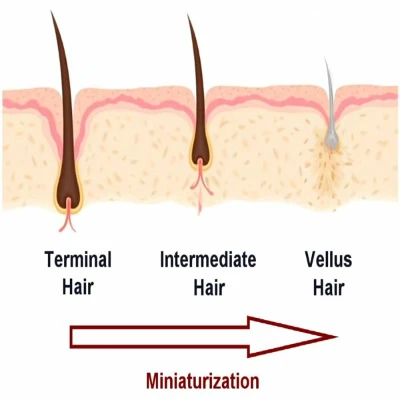
To understand why conventional hair loss treatments encounter a "biological bottleneck," we must examine what occurs beneath the scalp during the progression of androgenetic alopecia. A hair follicle is a dynamic, miniature organ that continuously cycles through active growth (anagen), regression (catagen), and rest (telogen). In individuals with a genetic predisposition to androgenetic alopecia, dihydrotestosterone (DHT) binds to androgen receptors within the "dermal papilla"-a specialized cluster of mesenchymal cells at the base of the follicle that regulates hair growth. Over time, this hormonal signaling triggers the progressive miniaturization of the follicle: the growth phase shortens, the resting phase lengthens, and with each subsequent cycle, the hair shaft becomes increasingly finer and shorter, until the follicle is virtually invisible to the naked eye.
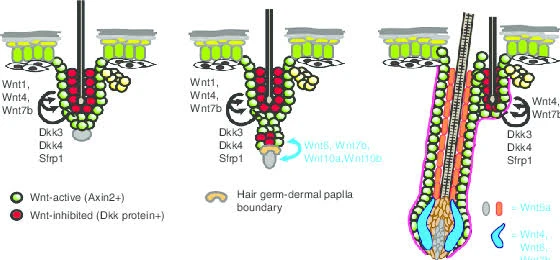
Conventional pharmacological treatments intervene in this chain reaction only indirectly. For instance, topical vasodilators like minoxidil improve nutrient delivery by dilating blood vessels surrounding hair follicles, thereby extending the active growth phase of the hair. Meanwhile, oral 5-alpha-reductase inhibitors-such as finasteride-lower levels of dihydrotestosterone (DHT) in the body and scalp, protecting vulnerable hair follicles from hormonal damage. Although these approaches remain the clinical standard for slowing hair loss and thickening fine, weakened hair, they cannot repair follicles that have already structurally collapsed, nor can they generate entirely new follicles on completely bald skin. Once the supply of donor hair follicles from the back of the scalp (the occipital region) is exhausted, even surgical hair transplantation reaches its physical limit. This biological bottleneck has prompted researchers to investigate the "master genetic switches" that govern the development of embryonic skin. Among these, the Wnt/β-catenin signaling pathway is particularly critical, serving as the primary blueprint for hair follicle formation. During fetal development, a localized surge in Wnt signaling triggers the aggregation of undifferentiated skin cells into dermal condensates, which then invaginate into the dermis to construct hair follicles. In adult mammals, this pathway must be reactivated whenever a hair follicle transitions from a resting phase back into an active growth phase. If the Wnt/β-catenin signaling pathway is inhibited, hair growth ceases.
In recent years, molecular biologists have uncovered why this vital regenerative pathway becomes "locked" in the scalp tissue of individuals experiencing hair loss. A key culprit is a protein known as CXXC-type zinc finger protein 5 (CXXC5). Acting as an endogenous negative feedback regulator, CXXC5 binds to another intracellular protein called Dishevelled (Dvl), effectively serving as a "molecular brake" that blocks the Wnt/β-catenin signaling pathway. Clinical biopsies of the scalps of patients with androgenetic alopecia (pattern baldness) have revealed abnormally high concentrations of CXXC5 within atrophied hair follicles and areas affected by hair loss. Meanwhile, an enzyme known as glycogen synthase kinase-3β (GSK-3β) continuously tags β-catenin, marking it for intracellular degradation. This deprives hair follicles of the transcriptional signals required to initiate growth.
Given that the hair loss process is driven by these two "molecular brakes," the research team sought to develop a targeted chemical intervention capable of releasing both simultaneously. Previous attempts using experimental peptides failed because the molecules were too large to effectively penetrate human skin. To overcome this, the researchers synthesized a compact, cell-permeable small molecule-a derivative of indirubin-which they named "KY19382." Unlike conventional anti-hair loss treatments that rely on vascular or hormonal pathways, this synthetic small molecule acts directly within the cell: it disrupts the protein-protein interaction between CXXC5 and Dishevelled, while simultaneously inhibiting GSK-3β. By blocking both of these negative regulators, the compound promotes the accumulation of β-catenin and its translocation into the cell nucleus, thereby reactivating the dormant genetic programs responsible for hair follicle morphogenesis.
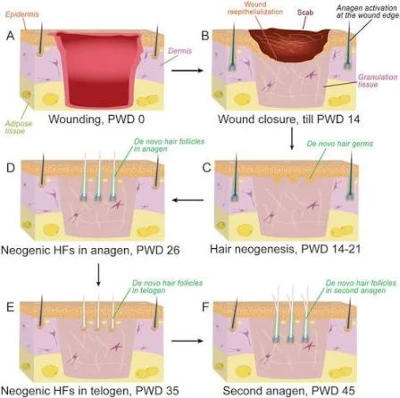
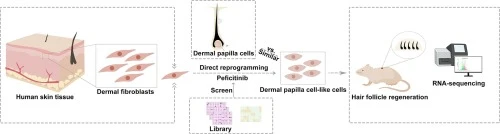
A preclinical study published in the *British Journal of Pharmacology* has garnered significant attention within the field of dermatology by demonstrating a phenomenon rarely seen with small-molecule drugs: *de novo* hair follicle neogenesis. In laboratory assays using human dermal papilla cells, this experimental activator significantly elevated levels of alkaline phosphatase and other key biomarkers associated with the capacity to induce hair growth. In *ex vivo* human hair follicle cultures, it proved far more effective at promoting hair shaft elongation than minoxidil, the standard drug used as a control. Most notably, in a mouse model of skin injury and hair regeneration, topical application of KY19382 stimulated the formation of entirely new, functional hair follicles on previously hairless skin-follicles that included sebaceous glands and exhibited normal growth cycles. Further research has indicated that activating this pathway can even restore hair follicle regenerative capacity in the context of metabolic diseases, such as diabetes-conditions where impaired wound healing and the suppression of the Wnt signaling pathway typically hinder hair regrowth.
For the broader fields of biotechnology and dermatological formulations, the emergence of a dual-target Wnt activator represents a paradigm shift in the approach to hair regeneration. Rather than viewing hair loss as an "irreversible tissue loss" that necessitates surgical tissue redistribution, this new generation of research focuses on "reprogramming" the skin's microenvironment through pharmacological means. By utilizing small-molecule scaffolds characterized by low molecular weight and high lipophilicity, researchers aim to overcome the transdermal delivery challenges that have long hindered the use of large-molecule growth factors and peptide-based therapies.
While the prospects for hair follicle regeneration are exciting, dermatologists and regulatory science experts advise a stance of cautious optimism. The transition from highly promising mouse studies to approved human therapies involves complex biological and safety-related hurdles. To date, all data demonstrating the efficacy of KY19382 in promoting hair follicle regeneration have been derived from preclinical research-specifically cell cultures, *ex vivo* human tissue models, and animal experiments. Until rigorous, multi-stage human clinical trials establish both clinical efficacy and a robust safety profile, the combination of surgical hair transplantation and existing medical therapies remains the "gold standard" for addressing severe hair loss. However, as our understanding of the "molecular brakes" within the hair growth cycle deepens, growing evidence suggests that severe hair follicle miniaturization may not be an irreversible biological endpoint. As researchers continue to refine small-molecule modulators capable of safely activating the skin's intrinsic regenerative mechanisms, the future of hair restoration may eventually shift from "transplanting existing hair follicles" to "cultivating new ones."