




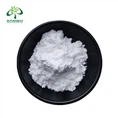
Are you looking for a new hair loss treatment that blocks DHT at its source, without drug side effects? In recent years, pyrilutamide (also known as KX-8326), a topical androgen receptor antagonist, has emerged as a research hotspot for the treatment of androgenetic alopecia and acne. Preliminary results indicate its potential to improve hair density and thickness. This article will guide you through the mechanism of action, research progress, and comparison with common treatments of pyrilutamide based on existing data.
What is pyrilutamide
99 powder pyrilutamide, also known as KX-8326 powder, is an investigational medication used to treat androgenetic alopecia (patterned hair loss) and acne. It is a selective androgen receptor antagonist that blocks androgen receptors and reduces the activity of androgens (such as testosterone and dihydrotestosterone, or DHT) in the skin and hair follicles. It binds to androgen receptors in the scalp and skin, blocking the effects of DHT and other androgens. This helps slow the miniaturization of hair follicles in androgenetic alopecia and reduces sebum production and inflammation in acne. This is a topical treatment that can be applied directly to the affected area (scalp or skin). This topical application helps minimize the systemic side effects that may occur with oral anti-androgen medications.
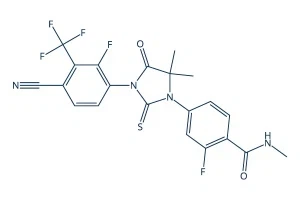
This medication has been clinically tested in China and other countries and has shown encouraging results in improving hair growth density and quantity in patients with androgenetic alopecia. If you require pyrilutamide, Xi'an Sonwu can provide it. Xi'an Sonwu looks forward to your inquiry.
Does pyrilutamide stop hair loss
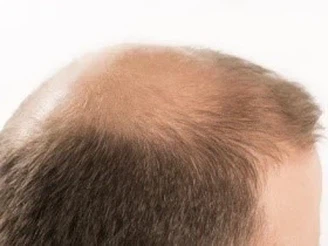
Yes, pyrilutamide may help stop hair loss, but it is still an investigational treatment and has not yet received widespread approval. Its efficacy in treating androgenetic alopecia (patterned hair loss) is currently being investigated. This type of hair loss is primarily caused by dihydrotestosterone (DHT) acting on androgen receptors in hair follicles. Its mechanism of action is to locally block these receptors on the scalp, potentially preventing DHT from causing hair follicle shrinkage.
How does it stop hair loss
Its expected effects include:
1. Blocking DHT signaling in hair follicles
2. Reducing hair follicle shrinkage (the process that leads to thinning hair)
3. Helping hair follicles remain in the growth phase
Because it is a topical medication, its systemic hormonal effects may be lower than those of oral anti-androgens.
Research Results
Current research indicates that Pyrilutamide has shown some potential as an anti-hair-loss treatment in clinical trials. Some trial results suggest that this drug may help reduce hair loss, increase hair density, and improve hair thickness and overall appearance in some subjects. However, results vary between studies, and their long-term effects and stability require further validation. Furthermore, this drug has not yet been approved by regulatory agencies in most countries and is still in clinical trials.
How does pyrilutamide compare to common hair loss treatments
Currently, common hair loss treatments mainly include finasteride and minoxidil. Finasteride inhibits hair follicle atrophy by reducing dihydrotestosterone (DHT) production, and there is substantial clinical evidence supporting its effectiveness in treating androgenetic alopecia.
Minoxidil promotes hair growth by stimulating hair follicle activity and improving scalp blood circulation. It is one of the most widely used and approved hair regrowth drugs.
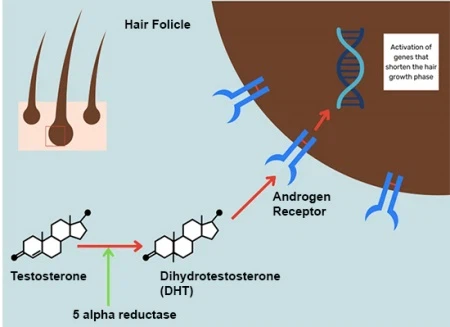
In contrast, pyrilutamide primarily reduces DHT's effects on hair follicles by blocking androgen receptors in the scalp, potentially delaying follicle atrophy and alleviating hair loss. However, because its clinical trials are still ongoing, the accumulated evidence and long-term safety data are not as comprehensive as those for finasteride and minoxidil. Therefore, the product shows potential in research to help reduce hair loss by blocking the effects of DHT at the hair follicle level. However, as it is still in the experimental stage, larger-scale clinical trials are needed further to confirm its efficacy, safety, and long-term effects.
What are the risks of using pyrilutamide
Pyrilutamide is a topical anti-androgen medication currently under investigation for the treatment of androgenetic alopecia. Early clinical trials and early reports provide some information about potential risks. The main risks of this compound include local scalp irritation and temporary hair loss.
1. Local Scalp Reactions
The most common side effects occur at the application site.
Possible reactions include:
Scalp irritation or redness
Itching
Dryness or mild burning sensation
Flakes or contact dermatitis

These reactions are usually mild and similar to the side effects of other topical hair regrowth medications (such as minoxidil).
2. Temporary Hair Loss
Some users may experience initial hair loss during the first few weeks of treatment. This is because hair follicles enter a new growth cycle. In many cases, the hair loss is temporary but can still be concerning for users.
3. Potential Hormonal Effects (Still under investigation)
Unlike finasteride, which reduces dihydrotestosterone (DHT) production, pyruvamide blocks androgen receptors in the scalp. Because of this mechanism, researchers are monitoring the potential systemic effects of the drug after it is absorbed into the bloodstream, such as decreased libido, hormonal imbalance, and fatigue. Currently, studies indicate low levels of systemic exposure, but long-term data remain limited.
If you would like to inquire about the price of 99 powder Pyrilutamide or other product information, please contact Xi'an Sonwu directly.
Email: sales@sonwu.com