




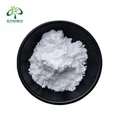
Amcinonide is a synthetic corticosteroid, primarily recognized for its anti-inflammatory activity and its use in dermatological medications. It belongs to the glucocorticoid family and is often used to treat inflammatory skin conditions, such as eczema and dermatitis. In pharmaceutical manufacturing, amcinonide serves as an active pharmaceutical ingredient (API) for developing topical formulations, including creams and ointments.
Its therapeutic value is fundamentally linked to its ability to modulate inflammatory responses through activity at glucocorticoid receptors. For pharmaceutical companies, formulation researchers, and raw material distributors, understanding its pharmacological classification, mechanism of action, chemical properties, and relationship to other corticosteroids is essential for evaluating its potential applications.
What are the uses of amcinonide, and to which class of drugs does it belong
Amcinonide powder belongs to the class of synthetic glucocorticoid corticosteroids. It is primarily known for its anti-inflammatory, antipruritic (anti-itch), and vasoconstrictive properties. As an active pharmaceutical ingredient (API), it is used in the development of pharmaceutical formulations-specifically topical preparations-intended to treat corticosteroid-responsive inflammatory skin conditions.
Its primary pharmacological effect is reducing skin inflammation, itching, redness, and irritation. These characteristics make amcinonide significant in the development of treatments for conditions such as eczema, contact dermatitis, and various other inflammatory dermatoses.
Its mechanism of action is closely tied to its interaction with intracellular glucocorticoid receptors. Upon entering target cells, the compound binds to these receptors, influencing the expression of genes involved in regulating inflammation. This process helps to suppress inflammatory signaling pathways and reduce the activity of mediators associated with swelling, redness, and irritation.

Its anti-inflammatory activity helps control local immune responses, while its antipruritic properties relieve itching. Furthermore, its vasoconstrictive activity reduces blood flow in the superficial layers of the skin, helping diminish visible redness and swelling in affected areas. During formulation development, pharmaceutical companies must consider the compatibility of amcinonide with selected excipients, as well as its dispersion, stability, and uniformity in the finished product. These factors influence the quality and performance of the final dosage form.

From an industry perspective, it is significant not only for its established pharmacological activity but also as an active ingredient for the development of topical corticosteroid formulations. Its suitability for a specific formulation depends on the specifications of the active pharmaceutical ingredient (API), the manufacturing process, and applicable pharmaceutical requirements.
What are the differences between amcinonide and triamcinolone acetonide
Although both amcinonide and triamcinolone acetonide are fluorinated synthetic glucocorticoids, they differ significantly in terms of potency, molecular structure, dosage forms, and clinical applications.
Regarding chemical structure and potency, amcinonide is a derivative of triamcinolone acetonide. Through the introduction of a cyclopentanone ketal group and an acetate group, amcinonide's lipophilicity and transdermal absorption are substantially enhanced, resulting in a high level of anti-inflammatory potency (classified as Class 2–3). In contrast, triamcinolone acetonide is considered to have low-to-moderate potency (classified as Class 3–6).
In terms of routes of administration and clinical use, it is intended exclusively for topical dermatological application (e.g., in creams, ointments, or lotions). It is primarily used to treat stubborn, hypertrophic, or severe skin lesions, such as plaque psoriasis and severe eczema. Triamcinolone acetonide offers a much broader range of administration routes; beyond topical application, it is also widely used in oral adhesive patches (for oral ulcers), intra-articular injections (to alleviate joint inflammation), and nasal sprays (for allergic rhinitis).
Regarding safety and precautions, the higher potency of amcinonide makes it more likely to cause side effects-such as skin atrophy or telangiectasia (dilated blood vessels)-with long-term use. Consequently, it is generally reserved for short-term treatment and should be avoided on areas with thin or folded skin, such as the face or axillae (underarms). By comparison, lower-concentration triamcinolone acetonide offers a better safety profile and a wider range of applications, making it suitable for the management and maintenance therapy of common, mild-to-moderate dermatitis.

What are the key considerations for amcinonide as a pharmaceutical raw material
The evaluation of amcinonide as an active pharmaceutical ingredient (API) requires rigorous quality control, compliance documentation, and clear formulation guidelines:
Chemical Identification and Purity: The API's structure must be confirmed using appropriate analytical methods. High-performance liquid chromatography (HPLC) and related complementary techniques are employed to assess purity, chemical characteristics, and batch-to-batch consistency.
Impurity Control: Standardized analytical controls must be in place to ensure that related substances, residual solvents, and process-related impurities strictly adhere to regulatory specifications.
Physicochemical Properties: The appearance, solubility, stability, and compatibility with excipients determine how the powder is handled and whether it can be successfully incorporated into topical formulations.
Documentation and Traceability: Procurement must be supported by valid Certificates of Analysis (COA), production traceability records, and a robust quality management system to meet technical and regulatory standards.
Storage and Stability: The material must be stored under the environmental conditions specified by the supplier, supported by stability data and appropriate packaging to prevent chemical degradation.
Mitigation of Systemic Risks: Formulation design must carefully account for percutaneous absorption kinetics-including factors such as the site of application, duration of treatment, and the potential use of occlusive dressings-to limit systemic exposure to the corticosteroid.
If your company is looking to source Amcinonide powder, you may contact Xi'an Sonwu to discuss product specifications, batch-specific Certificates of Analysis (COA), analytical testing parameters, and supply requirements.
Email: sales@sonwu.com
References:https://pubchem.ncbi.nlm.nih.gov/compound/443958?utm
https://www.ebi.ac.uk/chebi/searchId.do?chebiId=CHEBI:31199&utm
https://dailymed.nlm.nih.gov/dailymed/search.cfm?query=amcinonide&utm