




Obesity, type 2 diabetes, and metabolic syndrome remain major global health challenges. Researchers have therefore explored nuclear receptor pathways involved in energy metabolism, including PPAR-α, PPAR-γ, and PPAR-δ. Among these targets, GW0742 emerged as a potent experimental PPAR-δ agonist for investigating lipid metabolism and skeletal muscle energy utilization.
What is GW0742
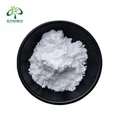
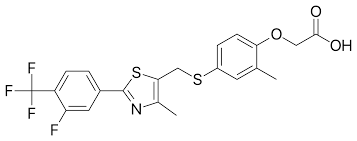
GW 0742 powder is a synthetic small-molecule compound developed as a selective agonist of peroxisome proliferator-activated receptor delta (PPAR-δ). PPAR-δ is a nuclear receptor expressed in multiple tissues, including skeletal muscle, liver, adipose tissue, and the cardiovascular system, where it regulates genes involved in energy metabolism and lipid utilization.
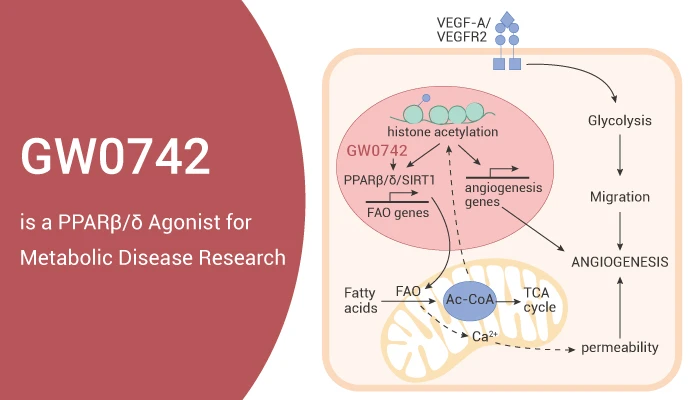
In experimental settings, activation of PPAR-δ has been shown to increase the expression of genes associated with fatty acid transport and mitochondrial β-oxidation. Because of these biological activities, GW0742 has become a valuable research tool for investigating metabolic diseases, insulin resistance, obesity, cardiovascular physiology, and muscle metabolism.It is important to note that GW0742 is intended for scientific research only. It has not received regulatory approval as a medicine, dietary supplement, or therapeutic agent.If you are interested in exploring GW0742, please feel free to contact Xi'an Sonwu.
What are the uses of GW0742
Current research involving GW0742 has focused primarily on understanding the physiological functions of PPAR-δ activation. Most available evidence comes from cell culture experiments and animal models.
Lipid Metabolism
One of the best-characterized effects of PPAR-δ activation is its influence on fatty acid metabolism. Experimental studies suggest that GW0742 promotes fatty acid oxidation by increasing the expression of enzymes involved in lipid transport and mitochondrial energy production. These findings have made it a useful compound for studying mechanisms related to obesity and dyslipidemia.
Glucose Homeostasis
Several preclinical studies indicate that activation of PPAR-δ may improve glucose utilization and insulin sensitivity under certain experimental conditions. Researchers continue to investigate how this pathway contributes to metabolic regulation and whether it may represent a future therapeutic target for metabolic disorders.
Skeletal Muscle Metabolism
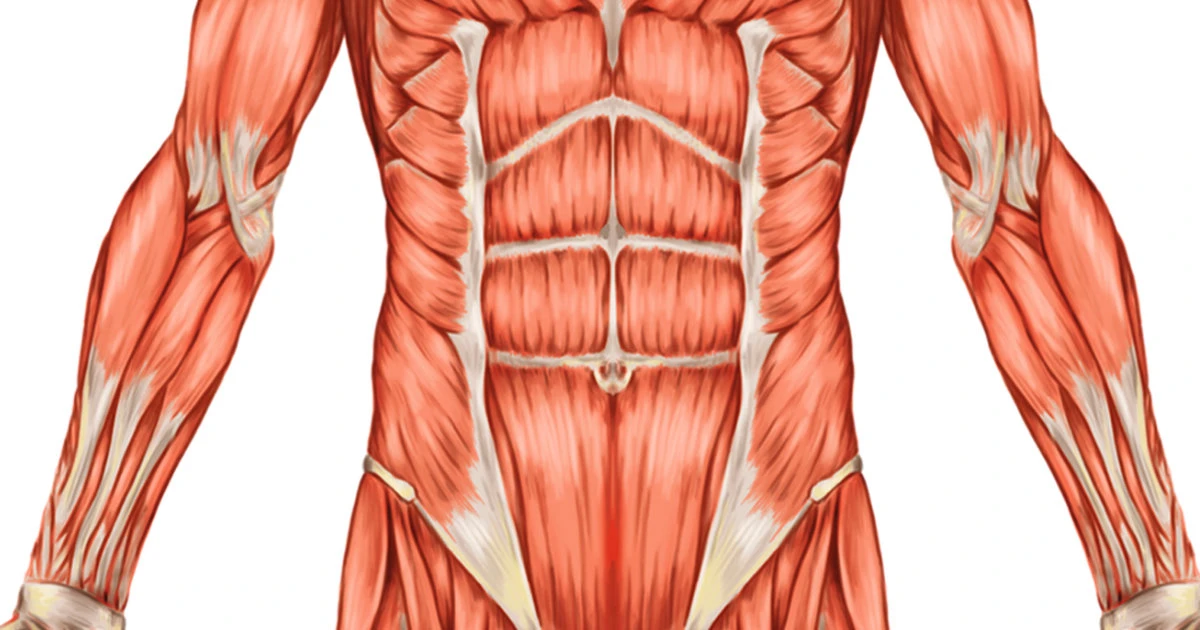
PPAR-δ plays an important role in regulating oxidative muscle fibers and mitochondrial function. Laboratory studies have reported that GW0742 increases oxidative metabolism in skeletal muscle, providing insights into muscle energy efficiency and metabolic adaptation. These observations remain limited to experimental research and should not be interpreted as evidence of clinical benefit.
Inflammation and Cardiovascular Research
Beyond metabolism, GW0742 has also been investigated for its potential effects on inflammatory signaling and vascular biology. Experimental evidence suggests that PPAR-δ activation may influence inflammatory mediators and endothelial function, although these findings require further validation before any clinical conclusions can be drawn.
Research conducted in laboratory models has demonstrated that GW0742 produces several biological responses consistent with PPAR-δ activation, including:
Increased fatty acid oxidation
Enhanced mitochondrial energy metabolism
Altered lipid metabolism
Modulation of glucose homeostasis
Changes in inflammatory signaling pathways
These findings have contributed to a broader understanding of metabolic regulation and have helped researchers investigate potential therapeutic pathways for metabolic disease.
However, it is essential to recognize that these observations have largely been obtained in animal models or in vitro systems.
What are the effects of GW0742
The compound undergoes hepatic metabolism through oxidative and conjugative pathways before being eliminated primarily through urine and feces. While circulating concentrations decline relatively quickly, downstream biological responses mediated through PPAR-δ signaling may persist beyond measurable plasma levels because of changes in gene expression.
Additional pharmacokinetic studies in humans would be required to determine absorption, distribution, metabolism, elimination, and potential tissue-specific effects.
Interest in PPAR-δ biology continues to grow as researchers seek better approaches for understanding metabolic disease, energy homeostasis, and cardiovascular function. GW0742 remains an important experimental tool for investigating these mechanisms in laboratory settings.
Despite encouraging findings from preclinical research, there is currently insufficient clinical evidence to support therapeutic applications in humans. Future studies, including well-designed clinical trials, will be necessary to determine whether selective PPAR-δ modulation can be translated into safe and effective medical treatments.
Until such evidence becomes available, GW0742 should be regarded solely as an investigational compound used to advance scientific understanding of metabolic biology rather than as a proven intervention for human health.
How Long Does GW0742 Remain In The Body
The exact pharmacokinetics of the compound in humans have not been fully established, and most available data come from animal studies and laboratory research. In rats, the plasma half-life of GW0742 has been reported to be approximately 1–3 hours. Although reliable human data are lacking, researchers generally estimate that its half-life may also be measured in several hours if human metabolism is comparable to that observed in animal models.
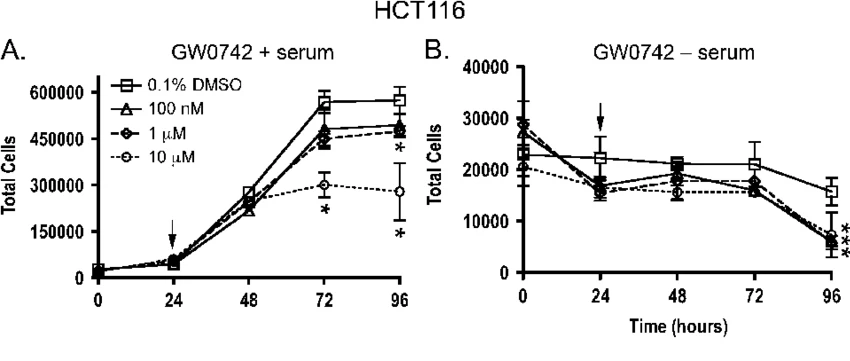
It is primarily metabolized in the liver via oxidation and conjugation pathways, with excretion mainly via urine and feces. Its relatively rapid metabolism suggests limited accumulation after a single dose, although repeated administration could maintain sustained systemic exposure. Based on its short half-life, it is likely to be largely cleared from the bloodstream within about 24 hours, while some metabolites may persist slightly longer. However, its biological and metabolic effects could continue beyond its physical presence in the body due to ongoing PPAR-δ receptor activation at the tissue level.
Researchers requiring high-purity GW0742 for laboratory applications should ensure that materials are sourced from qualified suppliers capable of providing analytical documentation, including COA, HPLC purity, and batch traceability.Xi'an Sonwu Biotech supplies research-grade GW0742 for laboratory research.
E-mail: sales@sonwu.com
References:https://pmc.ncbi.nlm.nih.gov/articles/PMC3724348/?utm_source=chatgpt.com