



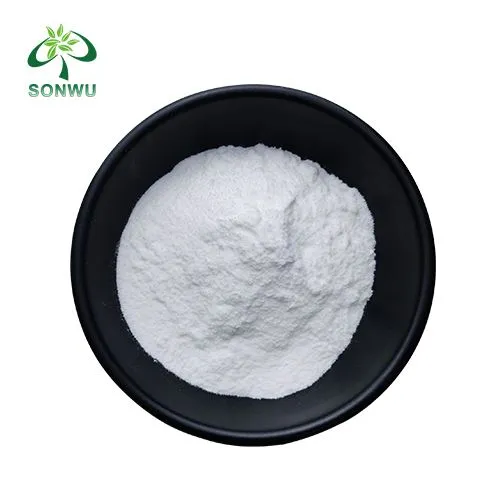


Xi'an Sonwu Biotech Co., Ltd. is one of the most professional manufacturers and suppliers of oleoylethanolamide powder in China. We warmly welcome yuo to wholesale bulk oleoylethanolamide powder for sale here from our factory. Quality products and reasonable price are available.
What is Oleoylethanolamide(OEA)?
Oleoylethanolamide powder derives from oleoylethanolamide, also abbreviated as OEA, which is a natural fatty acid amide that mainly modulates feeding and energy homeostasis by binding to peroxisome proliferator-activated receptor-alpha (PPAR-α), an anorexic lipid mediator regulated by feeding. According to the study before, OEA regulates feeding and body weight through activation of the PPAR-α. When this receptor is activated in the intestines of rats, the animals consume less food. Although its action on appetite seems to depend on the activation of vagal sensory afferent neurones, the mechanisms involved in exciting these sensory cells remain unclear. But with the study, there are two properties that have attracted a lot of interest to researchers: antinociception and anti-inflammatory effects.
Thus, researchers have mainly investigated whether OEA has these antinociceptive properties in two animal models of visceral and inflammatory pain. And now this two properties also become the main function and application of OEA in the market. As OEA supplier, Xi'an Sonwu can provide high quality powder with competitive price. If you're interested in OEA, welcome to contact Xi'an Sonwu.

Specification
ANALYSIS | SPECIFICATION | RUSULT |
Appearance | Fine White Crystal Powder | Conforms |
Color | White to Off-white | Conforms |
Identification | HNMR | Conforms |
Loss on Drying | ≤1.0% | 0.71% |
Water | ≤1.0% | 0.62% |
Melting Point | 56℃-62℃ | 58.1℃-60.4℃ |
Residue on Ignition | ≤0.2% | 0.06% |
Purity (HPLC) | ≥98.0% | 99.73% |
Chloride (Cl) | ≤0.02% | Conforms |
Heavy Metal | ||
Lead (Pb) mg/kg | ≤0.5 | Conforms |
Total Arsenic (As) mg/kg | ≤0.15 | Conforms |
Cadmium (Cd) mg/kg | ≤2.5 | Conforms |
Total Mercury (Hg) mg/kg | ≤1.5 | Conforms |
Solvent Residue | ||
Methanol | ≤0.3% | Not Detected |
Ethyl Acetate | ≤0.5% | Not Detected |
Microbiological Control | ||
Total Plate Count | <10,000cfu/g | Conforms |
Yeast & Mold | <300cfu/g | Conforms |
Salmonella | Negative/25g | Conforms |
Coliforms | ≤10cfu/g | Conforms |
E.Coli | Negative/10g | Conforms |
Staphylococcus | Negative/10g | Conforms |
Pseudomonas Aeruginosa | Negative/25g | Conforms |
Conclusion | Conforming to Enterprise Standard | |
What's the Role of OEA & How Does It Work in the Body?
Oleoylethanolamide powder has anti-inflammation and analgesic properties. OEA belongs to the FAE, the full name is fatty-acid ethanolamides (FAEs), which are a family of naturally occurring lipids that are present in both plant and animal tissues. Animal cells synthesize and release FAEs in a stimulus-dependent manner, in response to a variety of physiological and pathological stimuli, suggesting that these compounds may participate in cell-to-cell communication. OEA is a recently described as a drug which can regulate feeding and lipid metabolism. It is the natural ligand of the peroxisome proliferator-activated receptor-alpha (PPAR-α). Many reports state that OEA is a natural regulator of appetite, weight and cholesterol and can help to support weight loss. However, its action on appetite seems to depend on the activation of vagal sensory afferent neurones, the mechanisms involved in exciting these sensory cells remain unclear.
But since FAEs such as anandamide and palmitoylethanolamide cause strong analgesic and anti-inflammatory effects, presumably OEA is no exception. Thus, researchers have mainly studied whether OEA also has these antinociceptive properties in two animal models of visceral and inflammatory pain.

1. Anti-inflammation effect
Inflammation is closely related to the development of vascular diseases, such as restenosis, hypertension, and atherosclerosis. Lipopolysaccharide (LPS) is the major constituent of the outer wall of gram-negative bacteria and plays a critical role in mediating inflammation.
The study aimed to examine the anti-inflammatory actions of oleoylethanolamide (OEA) in lipopolysaccharide (LPS)-induced THP-1 cells. The cells were stimulated with LPS (1 μg/ml) in the presence or absence of OEA (10, 20 and 40 μM). The pro-inflammatory cytokines were evaluated by qRT-PCR and ELISA. The THP-1 cells were transiently transfected with PPARα small-interfering RNA, and TLR4 activity was determined with a blocking test using anti-TLR4 antibody. Additionally, a special inhibitor was used to analyse the intracellular signaling pathway. OEA exerted a potent anti-inflammatory effect by reducing the production of pro-inflammatory cytokines and TLR4 expression, and by enhancing PPARα expression. The modulatory effects of OEA on LPS-induced inflammation depended on PPARα and TLR4. Importantly, OEA inhibited LPS-induced NF-κB activation, IκBα degradation, expression of AP-1, and the phosphorylation of ERK1/2 and STAT3. In summary, the results demonstrated that OEA exerts anti-inflammatory effects by enhancing PPARα signaling, inhibiting the TLR4-mediated NF-κB signaling pathway, and interfering with the ERK1/2-dependent signaling cascade (TLR4/ERK1/2/AP-1/STAT3), which suggests that OEA may be a therapeutic agent for inflammatory diseases.

2. Analgesic effect
The related studies suggest that OEA might subserve other physiological roles, including pain perception. They have evaluated the effect of OEA in two types of nociceptive responses evoked by visceral and inflammatory pain in rodents. The results suggest that OEA has analgesic properties reducing the nociceptive responses produced by administration of acetic acid and formalin in two experimental animal models. Additional research was performed to investigate the mechanisms underlying this analgesic effect. To this end, the researches evaluated the actions of OEA in mice null for the PPAR-α receptor gene and compared its actions with those of PPAR-α receptor wild-type animal. They also compared the effect of MK-801 in order to evaluate the role of NMDA receptor in this analgesia. The data showed that OEA reduced visceral and inflammatory responses through a PPAR-α-activation independent mechanism. Co-administration of subanalgesic doses of MK-801 and OEA produced an analgesic effect, suggesting the participation of glutamatergic transmission in the antinociceptive effect of OEA. This study represents a novel approach to the examination of the effectiveness of OEA in nociceptive responses and provides a framework for understanding its biological functions and endogenous targets in visceral and inflammatory pain. Thus it showed that OEA has analgesic propertity.
OEM Service

Factory


Certifications


Shipping & Packaging


Why Choose Us
1. Xi'an Sonwu has been engaged in import-export for over 10 years with rich experience in development, research and production of API, plant extract, food additives, and other raw ingredients of health care products;
2. Xi'an Sonwu has a professional team with clear division of labor;
3. Products are tested by third parties;
4. Sample is available;
5. OEM service is supported.
If you want to know oleoylethanolamide powder price, please feel free to contact Xi'an Sonwu.
Email ID: sales@sonwu.com
Hot Tags: oleoylethanolamide powder, China, suppliers, manufacturers, factory, wholesale, buy, price, bulk, pure, raw, supply, for sale, Fasoracetam Powder, Tudca Raw Powder, Glutathione Bulk, Monobenzone Raw Powder, API, Organic Glutathione Powder


