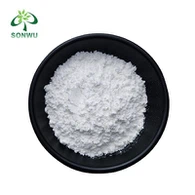


Xi'an Sonwu Biotech Co., Ltd. is one of the most professional manufacturers and suppliers of chlorin e6 in China. We warmly welcome yuo to wholesale bulk chlorin e6 for sale here from our factory. Quality products and reasonable price are available.
What Is Ce6
Chlorin E6 is a synthetic derivative of chlorophyll, a pigment found in plants that is involved in the process of photosynthesis. It is of particular interest in the field of photodynamic therapy (PDT), a treatment method that utilizes light and photosensitizing agents to selectively destroy cancer cells or other diseased tissues. When exposed to light of a specific wavelength, Ce6 can generate reactive oxygen species (ROS), such as singlet oxygen, which are highly toxic to cells. This photoactivation process leads to the selective destruction of targeted cells, while healthy cells are less affected.

It has shown likely applications in the therapy of different sorts of malignant growth, including skin disease, cellular breakdown in the lungs, and cerebrum cancers. In addition to its therapeutic uses, Ce6 is also being investigated for its imaging properties, as it can fluoresce under specific wavelengths of light, enabling the visualization of cancerous tissues.
It is important to note that the use of Ce6 and other photosensitizing agents for medical purposes should be conducted under the supervision and guidance of healthcare professionals, as it involves specific protocols, dosages, and light parameters to ensure safety and efficacy.
Certificate Of Analysis
|
Characteristic/method |
Specification |
Result |
|
Aρpearance |
White crystalline powder |
Conforms |
|
Mesh size |
100% pass 80 mesh |
Conforms |
|
Assay |
≥99% |
99.45% |
|
Loss on drying |
≤0.5% |
0.32% |
|
Related Substance
|
Total Impurities≤0.5% |
0.25% |
|
Other single impurity≤0.2% |
0.14% |
|
|
Sulfated ash |
≤0.1% |
0.01% |
|
Heavy Metals |
≤10ppm |
Conforms |
|
Total Plate Count |
≤1000cfu/g |
Conforms |
|
E.Coli |
Negative |
Negative |
|
Salmonella |
Negative |
Negative |
|
Staphylococcus aureus |
Negative |
Negative |
|
Conclusion |
Conforming to Enterprise Standard |
|
Ce6 Supplement
Xi'an Sonwu Biotech Co. Ltd. has rich experience in the global trade and health industry. Insisting on faith-based and quality first is our company's principle. We strictly control product quality, which means selection starts from raw materials. Besides, we handle every detail and reduce the cost to the maximum extent, then our customers can get cost-effective products. Based on these, customers have given much good feedback to our products. So you can look for Xi'an Sonwu Biotech Co. Ltd. when you need Ce6 Supplement.
Xi'an Sonwu completely makes sure of the product's quality, so samples can be supplied. Here is the quantity.
|
Form |
Sample Amount |
The Minimum of Quantity |
|
Powder |
1g |
1g |
Customers' Good Comment

What Is PDT Primarily Used To Treat
Photodynamic treatment (PDT) is essentially used to treat particular sorts of disease and other ailments. It is most generally utilized in the therapy of skin disease, especially non-melanoma skin tumors like basal cell carcinoma and squamous cell carcinoma. PDT can also be used as a treatment option for precancerous conditions like actinic keratosis.

In addition to skin cancer, PDT has applications in the treatment of other types of cancer, including lung cancer, esophageal cancer, bladder cancer, and certain types of head and neck cancers. It tends to be utilized alone or in mix with a medical procedure, radiation treatment, or chemotherapy, contingent upon the particular circumstance and the proposals of medical services experts.
PDT is also utilized in the treatment of certain non-cancerous conditions such as age-related macular degeneration (AMD), a typical eye sickness that causes vision misfortune, as well as certain dermatological conditions like acne, psoriasis, and photorejuvenation (improvement of skin appearance and texture).

It's important to note that the suitability of PDT as a treatment option will depend on various factors, including the type and stage of the disease, the patient's overall health, and the recommendations of the healthcare professionals involved in the care.
How Does Photodynamic Therapy Work
Photodynamic therapy (PDT) includes the utilization of a photosensitizing specialist(a drug that is activated by light) and a specific wavelength of light to selectively destroy targeted cells or tissues. The process of PDT can be summarized in the following steps:
1. Administration of Photosensitizing Agent: A photosensitizing agent, such as a drug like porfimer sodium or a synthetic derivative of chlorophyll called chlorin E6, is administered to the patient. The photosensitizing agent can be given intravenously, orally, or applied topically, depending on the specific condition being treated.

2. Accumulation and Selective Retention in Targeted Cells or Tissues: The photosensitizing agent selectively accumulates and is retained by the targeted cells or tissues, such as cancer cells or diseased tissues, due to their unique characteristics, such as increased blood vessel formation or specific receptors.
3. Activation by Light: After a sufficient time has passed for the photosensitizing agent to accumulate in the target cells, a specific wavelength of light is applied to the treatment area. The light can be delivered either externally (using a laser or light-emitting device) or internally (using fiber-optic devices or light-emitting sources inserted into the body).
4. Generation of Reactive Oxygen Species: When the photosensitizing agent absorbs light energy of the appropriate wavelength, it enters an excited state and interacts with oxygen molecules in the surrounding tissue. This connection prompts the creation of receptive oxygen species (ROS, for example, singlet oxygen, which are exceptionally responsive and harmful to cells.

5. Cell Destruction and Tissue Response: The generated ROS then cause damage to the targeted cells, leading to their destruction. This can occur through various mechanisms, including oxidative stress, damage to cell membranes, and disruption of cellular structures. The destruction of the targeted cells triggers a cascade of biological responses, including inflammation and immune system activation, that contribute to the therapeutic effects of PDT.
The advantage of PDT lies in its ability to selectively destroy targeted cells while minimizing damage to surrounding healthy tissues. The specific wavelength of light used, along with the ability of the photosensitizing agent to accumulate in specific cells or tissues, allows for precise targeting and treatment. The efficacy of PDT depends on various factors, including the type and stage of the disease, the photosensitizing agent used, the light parameters, and the individual patient's response to treatment.
The Side Effects
The use of Ce6 as a photosensitizing agent in photodynamic therapy (PDT) may be associated with certain side effects. It's important to note that the occurrence and severity of side effects can vary among individuals and depend on various factors, such as the specific treatment protocol, the dose of Ce6 administered, and individual patient characteristics. Common side effects of Ce6 may include:
1. Skin Sensitivity: After administration of Ce6, the treated area may become sensitive to light. This means that exposure to sunlight or certain types of artificial light sources (such as bright indoor lighting or tanning beds) should be avoided for a certain period, as it can lead to skin reactions such as redness, swelling, and sunburn-like symptoms.

2. Temporary Discoloration: The area treated with Ce6 may exhibit temporary discoloration, ranging from lightening to darkening of the skin. This discoloration is generally transient and resolves over time.
Less common side effects may include:
1. Pain or Discomfort: Some individuals may experience pain or discomfort at the treatment site during or after the PDT procedure. This can range from mild to moderate and can usually be managed with appropriate pain management strategies.
2. Inflammation and Swelling: Inflammation and swelling of the treated area are possible side effects of PDT using Ce6. These symptoms are typically temporary and subside over time.

3. Blistering and Skin Peeling: In some cases, blistering and skin peeling may occur in the treated area. This typically happens as a result of the photoactivation process and subsequent destruction of targeted cells. These side effects generally resolve with appropriate wound care.
4. Scarring: Although rare, scarring can occur as a result of PDT using Ce6. This is more likely to happen with deeper treatments or in individuals with a predisposition to scarring.
It's essential to discuss the potential side effects and risks of PDT with your healthcare provider before undergoing treatment. They can provide you with detailed information based on your specific situation and help manage any potential side effects that may arise during or after treatment.
Factory
1. Xi'an Sonwu has a factory with sufficient stock. In addition, Xi'an Sonwu has a clean and tidy production department with advanced equipment. Under the company's leadership, researchers continue to develop new products to meet customers' needs.
2. Xi'an Sonwu has advanced testing equipment and professional testing personnel, all of which show that Xi'an Sonwu aims to provide accurate and effective data and good service.


Certificate

Package

Logistics Update

In addition to guaranteeing product quality, the other most vital thing is clients could receive the goods smoothly. So, Xi'an Sonwu supplies all kinds of couriers according to different needs.

Company's Profile
Xi'an Sonwu Biotech Co., Ltd is a professional Chinese manufacturer and products supplier. It was founded in 2012 and is located in the Hi-Tech Industrial Zone, Xi'an City, Shannxi Province, China. It pays all attention to the development, research, and production of food additives, plants, extract, APl, and other ingredients of health care products. The company supplies five kinds of raw material products: Anti-hair loss Powders, Nootropic, API, Muscle Building products, and Plant Extract. Xi'an Sonwu sincerely believes that the premise of great cooperation is the best service and good quality. So, welcome your inquiry.
And if you want to know the Chlorin E6 price or you need Ce6 supplement, please contact XI'an Sonwu.
Email: sales@sonwu.com
Hot Tags: chlorin e6, China, suppliers, manufacturers, factory, wholesale, buy, price, bulk, pure, raw, supply, for sale, Retatrutide Peptide, Ibrutinib powder, pure Cannabidiol Oil, Veliparib Hydrochloride Powder, Desoxycortone Acetate Powder, Gefitinib powder