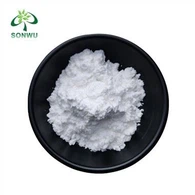




Xi'an Sonwu Biotech Co., Ltd. is one of the most professional manufacturers and suppliers of deoxyuridine powder in China. We warmly welcome yuo to wholesale bulk deoxyuridine powder for sale here from our factory. Quality products and reasonable price are available.
What Is Deoxyuridine
Deoxyuridine powder is a nucleoside that consists of a nitrogenous base called uracil and deoxyribose sugar. It is an intermediate molecule in deoxycytidine synthesis, a nucleotide essential for DNA replication and repair. Here is a more detailed explanation of deoxyuridine:
1. Uracil:
Uracil is a pyrimidine base that is one of the four bases found in nucleic acids. It has a molecular formula of C4H4N2O2 and a structure consisting of a planar, six-membered ring containing two nitrogen atoms and two oxygen atoms. Uracil is a single-ring structure and is similar in shape to thymine, another pyrimidine base found in DNA. Uracil differs from thymine in that it lacks a methyl (-CH3) group, which is present in thymine.
In DNA, the equivalent base to uracil is thymine, which is formed through the enzymatic conversion of deoxyuridine monophosphate (dUMP) to deoxythymidine monophosphate (dTMP). Hence, uracil is typically found in RNA, while thymine is mostly observed in DNA.
2. Deoxyribose Sugar:
The other component of deoxyuridine is a deoxyribose molecule. Deoxyribose is a five-carbon sugar (pentose) that forms the backbone of DNA. It has a similar structure to ribose, the sugar found in RNA, but with one crucial difference: deoxyribose lacks an oxygen atom at the 2' carbon position. This deoxygenation is what gives deoxyribose its name and imparts increased stability to the DNA molecule.
The deoxyribose sugar in deoxyuridine consists of five carbon atoms forming a ring structure, with hydrogen (H) atoms and hydroxyl (-OH) groups attached at specific positions. Attached to the first carbon atom (C1) is the uracil base, and attached to the fifth carbon atom (C5) is a phosphate group, forming deoxyuridine monophosphate (dUMP).
The purity of our company's deoxyuridine supplement can reach 99%. Also, our prices are very competitive compared to other companies. If you want to know more, please contact Xi'an Sonwu Biotech Co. Ltd.

Where Is Deoxyuridine Found
Xi’an Sonwu has rich experience in the global trade and health industry. Reputation-based quality first is the principle of Xi’an Songwu Company. Xi’an Sonwu strictly controls product quality, so the selection of materials starts with raw materials. Also, we handle every detail and minimize costs so that our clients can get the most cost-effective products. Based on these, customers have given high praise to our products. If you need deoxyuridine supplement, find Xi’an Sonwu Biotech Co. Ltd.
We completely make sure of the product’s quality, so samples can be supplied. Here is the quantity.
|
Form |
Sample Amount |
The Minimum of Quantity |
|
Powder |
10g |
10g |
|
Bulk Capsules |
200 capsules |
200 capsules |
|
Bottled Capsules |
5 bottles |
5 bottles |
Customers' Good Comment

OEM Service
Xi'an Sonwu not only can supply high-quality Deoxyuridine Powder but also supply its capsule.
So any customers could customize the capsules they want. And items below can be supplied.
Customized capsules shells (size, color, material)
Customized bottles(size, color, material, style)
Customized packaging(vacuum foil packaging, box, drum)
Customized label(paint film, matte film, optical mask)

What Is Deoxyuridine in PCR
Deoxyuridine (dU) can be introduced into the polymerase chain reaction (PCR) methodology to enable several applications, such as selective amplification, mutation detection, and library preparation for next-generation sequencing. The incorporation of deoxyuridine in PCR involves the use of a modified DNA polymerase and the addition of dU-containing primers or dUTP nucleotides. Here's an overview of how deoxyuridine is utilized in PCR and its significance in specific applications:
1. Modified DNA Polymerase: To incorporate deoxyuridine in PCR, a DNA polymerase with uracil excision capability is typically used. This specialized DNA polymerase possesses an associated enzymatic activity called uracil DNA glycosylase (UDG) that recognizes and excises uracil bases from DNA molecules. UDG removes uracil by cleaving the glycosidic bond between the uracil base and the sugar, leaving behind an abasic site or "AP site."
2. dU-Containing Primers: PCR primers are short DNA strands that serve as starting points for DNA synthesis during the amplification process. To introduce deoxyuridine, one or both of the PCR primers can be modified to contain dU instead of the traditional deoxythymidine (dT). The incorporation of dU in the primer sequences allows for its subsequent manipulation during the PCR process.
3. Uracil DNA Excision: During PCR, the dU-containing DNA strands act as templates for DNA synthesis. As the modified DNA polymerase synthesizes a new DNA strand complementary to the template, it recognizes the incorporated dU. The DNA glycosylase activity of the polymerase removes the dU, leaving behind the abasic site. This process is known as uracil DNA excision.
4. Uracil DNA Repair: Once the dU has been excised, the DNA polymerase proceeds with the synthesis by incorporating the appropriate nucleotide to complement the template strand. In the case of dU, the DNA polymerase inserts deoxyadenosine (dA) opposite the abasic site (AP site).
a. Significance in PCR Applications: a. Selective Amplification: Incorporating dU into PCR primers allows for selective amplification of specific DNA targets. By designing specific primers with dU bases, it is possible to introduce unique sequences, such as barcodes or adaptors, at specific locations within the amplified products. This approach is valuable for applications like multiplex PCR, where multiple targets are amplified simultaneously and then distinguished based on the introduced unique sequences.
b. Mutation Detection: PCR with dU-containing primers enables the detection of single nucleotide polymorphisms (SNPs) or point mutations. After PCR amplification, the presence of the AP sites resulting from the uracil excision allows for subsequent enzymatic cleavage at these sites. This step, often performed by endonucleases such as UDG or Endonuclease IV, generates specific DNA fragment sizes indicative of the presence or absence of the mutation. By analyzing the fragment pattern, genetic variations can be identified.
c. Next-Generation Sequencing Library Preparation: Incorporating dU into PCR products during library preparation for next-generation sequencing allows for the removal of PCR duplicates. After PCR enrichment of DNA fragments, the dU-containing strands are treated with UDG, which selectively excises the uracil-containing strands. This step effectively eliminates PCR duplicates that would otherwise confound the downstream sequencing analysis, giving a more accurate representation of the original DNA fragment diversity.
What Is the Mechanism of Action of Deoxyuridine
Deoxyuridine (dU) is a nucleoside that has a role primarily in RNA synthesis, rather than in DNA. However, when artificially introduced into DNA, it can have various effects on the structure and function of the DNA molecule. The mechanism of action of deoxyuridine in DNA can vary depending on the context and experimental setup. Here are some potential mechanisms by which deoxyuridine can affect DNA.
1. Base Pairing: Deoxyuridine, like thymine, is a pyrimidine base. In DNA, thymine (T) specifically pairs with adenine (A) through two hydrogen bonds, forming a stable base pair. However, if deoxyuridine is incorporated into DNA instead of thymine, it can potentially form non-canonical base pairs. For example, deoxyuridine can mispair with both adenine (A) and guanine (G), resulting in U:A and U:G base pairs, respectively. These non-canonical base pairs can disrupt the structure and stability of DNA, leading to mutations and potentially affecting DNA replication and gene expression.
2. Mismatch Repair: Cells have sophisticated mechanisms to maintain the integrity of DNA and correct errors that arise during replication or DNA damage. One of these mechanisms is mismatch repair, which involves the recognition and removal of mismatched or incorrect base pairs. When deoxyuridine is present in DNA, it can lead to a U:A or U:G mismatch. Mismatch repair enzymes, such as MutS and MutL, can recognize these mismatches and initiate repair processes. The removal of deoxyuridine from DNA and its replacement with the correct nucleotide (i.e., thymine) is a crucial step in maintaining the fidelity of DNA.
3. DNA Damage and Repair: The presence of deoxyuridine in DNA can also result in DNA damage. For example, deoxyuridine can be susceptible to spontaneous deamination, a chemical process in which the amino group of cytosine or deoxyuridine is converted to a keto group, resulting in the formation of uracil. Uracil in DNA can lead to the mispairing of adenine during replication, potentially introducing mutations. However, cells possess DNA repair mechanisms, such as base excision repair, which detect and remove uracil from DNA. Uracil DNA glycosylase is an enzyme that specifically recognizes and cleaves the uracil base, initiating the repair process. The resulting gap in the DNA is then filled with the appropriate nucleotide by DNA polymerase and sealed by DNA ligase, effectively repairing the damage caused by deoxyuridine.
4. Effects on DNA Stability and Structure: The presence of deoxyuridine in DNA can affect its stability and structural properties. The base pairing of uracil with adenine or guanine can introduce structural distortions in the DNA helix, potentially leading to altered DNA-protein interactions or changes in the overall DNA conformation. Additionally, the repair processes involving uracil removal and nucleotide replacement can result in DNA strand breaks or gaps if not properly repaired, risking genomic instability.
What Is the Difference Between Deoxyuridine and Uridine
Deoxyuridine and uridine are both nucleosides, which are molecules composed of a nitrogenous base (uracil) and a sugar (ribose or deoxyribose). However, they differ in terms of the type of sugar they are attached to, and the nucleic acids in which they are commonly found.
1. Sugar Component: Uridine: Uridine is a nucleoside that consists of the pyrimidine base uracil attached to a ribose sugar molecule. The ribose sugar contains a hydroxyl (-OH) group attached to the 2' carbon.
Deoxyuridine: Deoxyuridine, on the other hand, has a deoxyribose sugar instead of ribose. Deoxyribose lacks an oxygen atom compared to ribose, which results in a hydrogen atom being present instead. This difference makes the deoxyribose sugar more stable in the presence of reactive oxygen species, which helps protect DNA from oxidative damage.
2. Function and Presence in Nucleic Acids: Uridine: Uridine is primarily found in RNA (ribonucleic acid), which plays various roles in protein synthesis, gene expression, and other cellular processes. It is one of the four nucleosides that make up RNA, along with adenosine, cytidine, and guanosine. Uridine plays an essential role in RNA structure and function, specifically in coding for genetic information and regulating gene expression.
Deoxyuridine: Deoxyuridine is not naturally found in DNA (deoxyribonucleic acid), the genetic material of cells. Instead, DNA contains deoxythymidine (dT). Thymidine, the nucleoside form of deoxythymine, consists of the pyrimidine base thymine attached to deoxyribose. Thymidine pairs specifically with adenine (A) in DNA, forming the A-T base pair, thereby maintaining the DNA structure and stability.
However, deoxyuridine can be artificially introduced into DNA through laboratory methods such as site-directed mutagenesis or chemical modifications. This allows researchers to investigate the effects of deoxyuridine on DNA structure, replication, repair, and other biological processes. By introducing deoxyuridine into DNA, scientists can study the consequences of altered base pairing, DNA repair mechanisms, and potential genetic instability.
3. Enzymatic Incorporation: Uridine: During RNA synthesis, the enzyme RNA polymerase incorporates uridine into the growing RNA strand by recognizing the complementary base pairs in the DNA template. Uridine is involved in the process of gene expression and protein synthesis in cells.
Deoxyuridine: The natural enzymatic incorporation of deoxyuridine into DNA is negligible. DNA polymerases, the enzymes responsible for DNA replication and repair, primarily recognize and incorporate deoxythymidine during DNA synthesis. This specificity is crucial for the accurate replication and transmission of genetic information.
4. Biological Role: Uridine: Uridine, as a component of RNA, is involved in various biological processes. It contributes to the structural stability of RNA molecules by forming base pairs with adenine or guanine. Uridine also participates in RNA modification and serves as a precursor for the synthesis of other important molecules, such as cytidine diphosphate (CDP)-choline, a component of phospholipids.
Deoxyuridine: While deoxyuridine is not naturally occurring in DNA, its artificial incorporation in DNA studies can provide insights into the effects of altered base pairing, DNA repair mechanisms, and potential genetic instability. The introduction of deoxyuridine into DNA molecules in the laboratory allows researchers to examine the consequences of modified nucleotides and investigate the interactions between DNA and various proteins.
Factory
Xi'an Sonwu is located in a place with a beautiful natural environment, covering an area of 10,000 square meters. The factory has advanced production equipment, and the technical team is well-equipped, clean, and tidy, with sufficient stock. Under the leadership of the company, researchers insist on developing new products. The following is the testing environment of our laboratory, advanced testing equipment, and professional testers, with a strict attitude to providing valuable data for our products and providing our customers with a quality experience.

Certificate

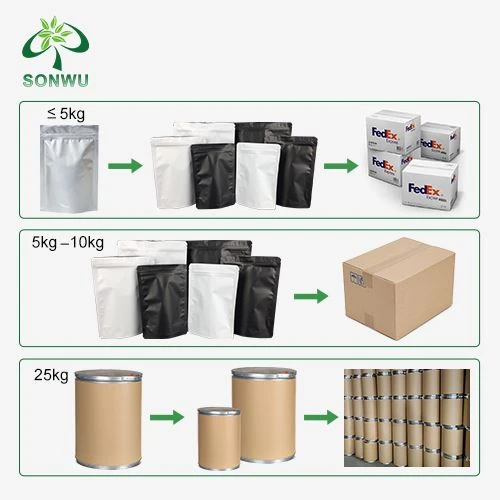
Packaging

Recent Logistics Record

In addition to guaranteeing product quality, the other most vital thing is clients can receive the goods smoothly. So, Xi'an Sonwu supplies all kinds of couriers according to different needs.


FAQ
1. How to inquiry?
You can contact us by email, telephone number, or social media.
2. How to guarantee the quality of products?
Each batch needs to be tested so we can supply COA for customers. Additionally, our products pass the test: HPLC, UV, GC, TLC, etc. And we also cooperate with third parties, like, SGS.
3. How to pack and store the product?
Pack: Vacuum sealed foil packaging & Sealed export grade drum or pack according to customers' need
Storage: For a short time, you can keep it in a dry and cool place and make it avoid sunlight.
If you are interested in our company's deoxyuridine powder, please contact Xi'an Sonwu Biotech Co. Ltd.
Email: sales@sonwu.com
Hot Tags: deoxyuridine powder, China, suppliers, manufacturers, factory, wholesale, buy, price, bulk, pure, raw, supply, for sale, Fonturacetam Hydrazide Powder, PRL-8-53 Powder, NSI 189 Phosphate Powder, Cladribine Powder, paroxetine hydrochloride powder, Mexidol Powder