




Exercise-mimicking compounds are gaining increasing attention in metabolic, muscle, and mitochondrial research. Among the many compounds under investigation, SLU-PP-915 and SLU-PP-332 are two closely related experimental pan-estrogen receptor (ERR) agonists. Their potential effects on mitochondrial activity, fatty acid oxidation, skeletal muscle metabolism, and exercise-related gene expression make them highly attractive research tools.
Meanwhile, as researchers evaluate these compounds, questions such as "Side effects," "Comparison of SLU-PP-915 and SLU-PP-332," "Dosage," and "Benefits" are becoming increasingly important. However, it is important to clarify first that it is still in the preclinical research stage.
What are the potential benefits of SLU-PP-915
SLU-PP-915 powder is a synthetic pan-ERR agonist, meaning it is designed to activate ERRα, ERRβ, and ERRγ. These orphan nuclear receptors play crucial roles in regulating mitochondrial biosynthesis, oxidative phosphorylation, fatty acid oxidation, and energy metabolism. Because these pathways are also significantly affected by aerobic exercise, researchers have investigated ERR activation as a potential pharmacological approach to mimic certain molecular characteristics of exercise. A recent landmark study evaluated the efficacy of SLU-PP-915 as an orally administered active exercise mimic. In animal studies, researchers found that it improved aerobic exercise performance, including running distance and duration. The compound also induced Ddit4 expression, which is associated with acute molecular responses to aerobic exercise. Importantly, its exercise-related activity was observed after oral administration, accounting for systemic exposure.
These findings suggest several promising areas of research:
Mitochondrial metabolism: The ERR signaling pathway is closely related to mitochondrial oxidative metabolism.
Fatty acid utilization: Activation of the ERR pathway can promote transcriptional programs involved in fatty acid oxidation.
Skeletal muscle adaptation: The ERR signaling pathway contributes to the molecular response of skeletal muscle to aerobic exercise.
Exercise simulation studies: The compound may help researchers investigate signaling pathways typically activated during physical activity.
Metabolic disease research: ERR agonists are being investigated as potential tools for studying obesity, insulin sensitivity, and metabolic dysfunction. However, these potential benefits should not be interpreted as proven clinical efficacy. Current evidence is primarily from preclinical studies, and further pharmacological, toxicological, and human studies are needed.
SLU-PP-915 vs. SLU-PP-332: What are the differences
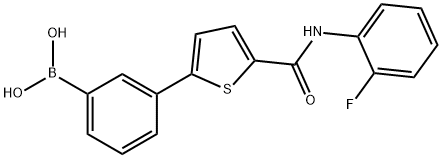
SLU-PP-915 was developed in part to address a significant limitation of the earlier compound, SLU-PP-332. Both compounds are pan-ERR agonists, but their chemical structures and pharmacological properties differ.
SLU-PP-915 and SLU-PP-332 are both experimental pan-ERR agonists targeting ERRα, ERRβ, and ERRγ, with research focusing on their exercise-mimicking effects and metabolic regulation. However, their chemical structures and pharmacological properties differ. SLU-PP-915 is a chemically distinct compound with demonstrated oral bioavailability in preclinical studies, while SLU-PP-332 is an earlier-developed pan-ERR agonist with limited oral bioavailability. Animal studies show that both compounds improve exercise-related performance, including aerobic capacity and endurance. Therefore, the most significant difference lies in oral bioavailability. Initially, SLU-PP-332 showed exercise-mimicking activity in mice, but was limited by its low oral bioavailability. Subsequently, SLU-PP-915 was shown to be a pan-ERR agonist with high oral bioavailability and exhibited similar exercise-related activity in animal models, given its systemic exposure.
SLU-PP-332 itself remains an important research reference. Early studies have shown that it can enhance mitochondrial function and cellular respiration in mice and promote oxidative properties of skeletal muscle. Other animal studies have also found effects on energy expenditure, fatty acid oxidation, and insulin sensitivity in metabolic syndrome models. Therefore, for researchers comparing these two compounds, the key difference is not simply which compound is "stronger." Instead, researchers should consider pharmacokinetics, oral exposure, receptor activity, experimental models, and research objectives.

What Are SLU-PP-915 Side Effects and Dosage
The side effects of SLU-PP-915 require special attention because clinical evidence remains insufficient to establish a reliable adverse-reaction profile. Researchers should not assume that the absence of reported clinical side effects means the compound is safe.
Preclinical pharmacological studies have raised further questions. A recent review noted that the compound contains an electrophilic borate substituent, which may form covalent interactions with non-target proteins. While this structural feature is associated with improved metabolic stability in some in vitro studies, it also underscores the importance of conducting broader safety and off-target effects studies.
Metabolism is another emerging area of research. A 2026 analytical study using human liver S9 fraction and microsomes identified seven Phase I metabolites of the compound. These findings suggest the compound undergoes metabolic transformation, but metabolite identification alone cannot determine clinical toxicity.
Regarding the compound's dosage, no established or medically validated human doses exist. Experimental doses used in animal or laboratory studies should not be directly translated into human dose recommendations. Differences in species, body weight, metabolism, exposure, pharmacokinetics, and receptor sensitivity can significantly affect responses.
This distinction matters because SLU-PP-915 and SLU-PP-332 are still investigational compounds, not marketed human drugs. Their potential benefits remain scientifically significant, and their long-term safety, appropriate clinical exposure, and therapeutic use require further investigation.
For research institutions seeking SLU-PP-915 for laboratory and analytical studies, Xi'an Sonwu Biotechnology Co., Ltd. provides information on research-grade compound sources and products.
Email: sales@sonwu.com